Aquaculture Stewardship Council Certification
ASC promises “responsible aquaculture”. In reality it approves industrial fish farms plagued by sea-lice infestations, chemical treatments, overcrowding, and mass mortality.
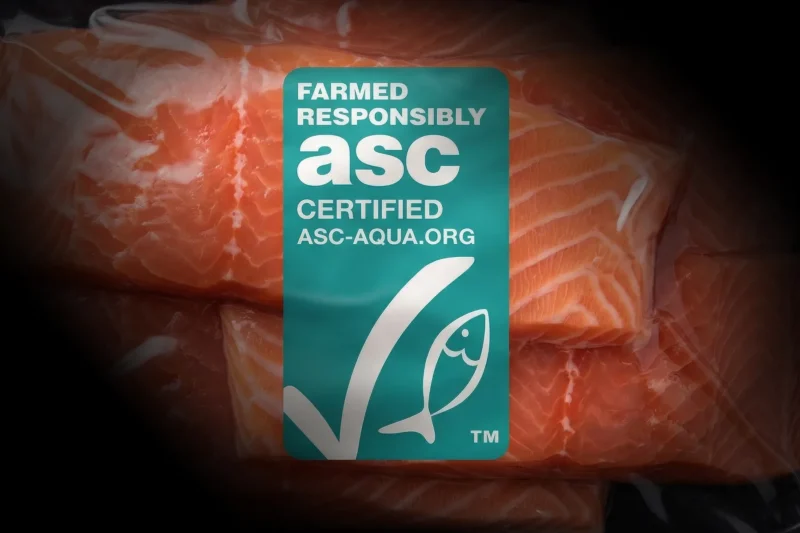
The Claim
They Say…
This product comes from a farm that has been independently certified to the ASC’s standard for responsibly farmed seafood.
We Say…
If breaching welfare limits for weeks on end still earns you a sustainability badge and a guided tour for seafood buyers, we wonder what the ASC actually protects except corporate profits.
The Reality
The Aquaculture Stewardship Council is a charity, which was established to address the “most pressing environmental and social impacts of aquaculture”.1 Its “responsibly farmed” label is thought to be the gold standard for sustainability of farmed fish and its aim to drive up standards across the industry is welcome. And yet all is not well with the ASC.
Although it states that it receives no money from the certification process itself, it does not mention the funds it receives from licensing fees.2 And, according to environmental group WildFish, those fees are the source of 97.6% of ASC’s annual income.3 The potential for a conflict of interest is clear, and environmental groups continue to raise serious concerns over the ASC’s reassuring “responsibly farmed” labelling.
Their biggest concern relates to the prevalence of sea lice on salmon farms and the high number of chemical treatments permitted by the ASC to control them.4 In Scotland, up to nine parasiticide treatments are allowed under the ASC’s standards.5
A second complaint is around the permissible rates of antibiotic treatments, given the problems of antibiotic-resistant superbugs that spread from factory farms.6
A third complaint relates to the quantity of wild fish that the ASC allows to be caught, killed, and included in feed for the farmed fish.7 As a charity ostensibly dedicated to sustainability, there is a lot to answer here.
And a fourth complaint relates to ASC certification being awarded to fish farms which are located in protected marine areas.8 Given the spread of sea lice to wild fish and the pollution of waters with toxic chemicals, this is, indeed, a big cause for concern.
In 2025, a coalition of environmental groups accused the ASC of endorsing “irresponsible salmon farming practices that place wild fish and marine ecosystems at risk”.9 It wrote: “Until such time as this industry can demonstrate conclusively that it can stop the appalling impact on wild salmonids and on the wider marine environment in Scotland, no one should buy or eat Scottish farmed salmon nor should anyone be fooled by meaningless slogans like ‘responsibly sourced.'”10
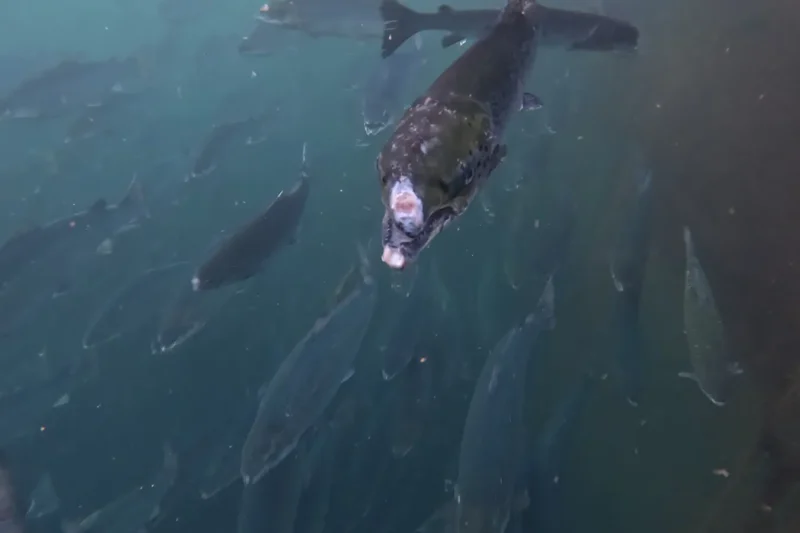
ASC’s lack of enforcement of the standards they do have is also worrying. In 2025, an ASC-certified salmon farm operated by Bakkafrost in Scotland exceeded the scheme’s own sea-lice limits for 11 consecutive weeks, reaching nearly four times the permitted threshold. Sea lice eat the fish alive, making any infestation, let alone one which breaches the permitted threshold by such a wide margin, truly horrific for animal welfare. The farm in question kept its certification anyway, making a mockery of the ASC label. Not only that, the farm was later used by ASC to host a guided “discovery tour” for seafood buyers.11 Apparently breaching the rules doesn’t disqualify you from showcasing them.

In 2025, WildFish’s director, alongside the coalition of environmental groups, accused the ASC of being captured by the industry, which they said it appears to serve over and above the environment and wildlife.12
It is a familiar story, played out across all industrial farming sectors. Consumers are reassured by the sustainability label. Retailers get a claim for their packaging that helps them sell more product. And industrial farming continues unabated. Everyone wins. Except the fish, Scotland’s ecosystems, local communities, wildlife, and the consumers who thought the label was a guarantee that all is well.
What They Don't Show You
Still permitted under this label:
Who Uses This








The Bottom Line
The ASC certification protects the profits of the multi-million pound salmon industry. It does not protect farmed fish, wild fish, or the environment.
References
- 1. https://asc-aqua.org/blog/15-facts-about-the-asc/
- 2. https://asc-aqua.org/blog/15-facts-about-the-asc/
- 3. https://wildfish.org/wp-content/uploads/2025/03/WildFish-Report_Responsibly-Farmed_March-2025.pdf
- 4. https://wildfish.org/latest-news/new-asc-farm-standard-serves-salmon-industry-not-oceans/
- 5. https://wildfish.org/latest-news/new-asc-farm-standard-serves-salmon-industry-not-oceans/
- 6. https://wildfish.org/latest-news/new-asc-farm-standard-serves-salmon-industry-not-oceans/
- 7. https://wildfish.org/latest-news/new-asc-farm-standard-serves-salmon-industry-not-oceans/
- 8. https://wildfish.org/latest-news/new-asc-farm-standard-serves-salmon-industry-not-oceans/
- 9. https://wildfish.org/latest-news/new-asc-farm-standard-serves-salmon-industry-not-oceans/
- 10. https://www.seafoodsource.com/news/environment-sustainability/environmental-groups-criticize-new-asc-farm-standard-s-salmon-guidelines
- 11. https://www.theferret.scot/aquaculture-stewardship-council-bakkafrost/
- 12. https://www.seafoodsource.com/news/environment-sustainability/environmental-groups-criticize-new-asc-farm-standard-s-salmon-guidelines
Take Action
-
 Frankenchickens
Ban Frankenchickens in the UK
Tell the Secretary of State at Defra to ban factory-farmed and fast-growing chickens known as Frankenchickens.
-
 Frankenchickens
Ask Your MP to Take Action
Ask why Frankenchickens are legal, when it’s unlawful to farm animals that will suffer because of how they have been bred.
-
 Factory Farming
End Factory Farming by 2040
It's time to bring it all down. Tell the government to block new factory farms and ban factory farming by 2040.
-
 Gas Chambers
Ban CO2 Gas Chambers for Pigs
Tell the Secretary of State at Defra to ban the use of CO2 gas chambers for pigs.
-
 Gas Chambers
Ask Your MP to Take Action
Ask why CO2 gas chambers are legal when the government’s Animal Welfare Committee recommends phasing them out?
-
 Gas Chambers
Tell Tesco to Drop CO2 Gas Chambers
Tell Tesco to stop selling meat from pigs killed in CO2 gas chambers, and commit to honest, transparent labelling.
-
 Gas Chambers
Tell McDonald’s to Drop Gas Chambers
Tell McDonalds to stop sourcing pork from pigs killed in CO2 gas chambers, and be transparent about slaughter methods.
-
 Donate
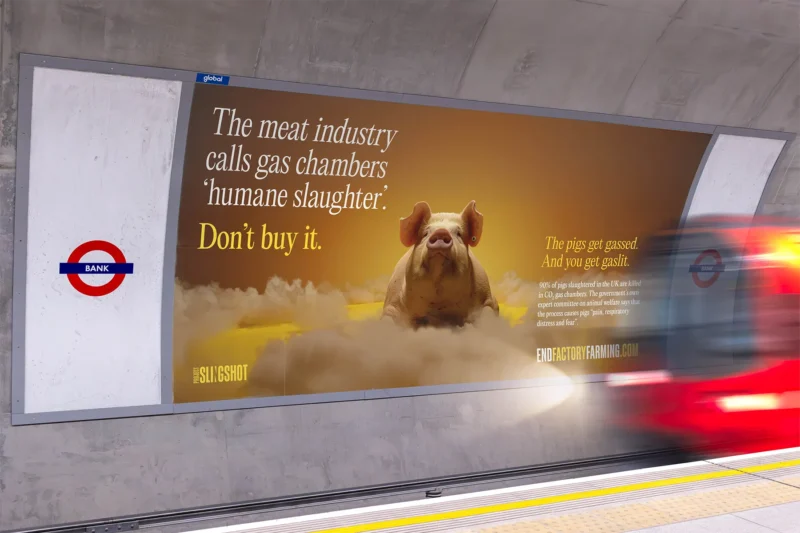
Power the Slingshot
Your monthly gift funds high-impact billboards, PR stunts, and campaigns that expose Big Ag and help us to bring down factory farming.