Drug-Resistant Superbugs in Meat
Pork, chicken, and turkey meat contaminated.
of UK pork products sampled were infected with antibiotic-resistant superbugs.1
of Lidl chicken tested was found to contain antibiotic-resistant superbugs.2
people die each year from antibiotic-resistant infections.3
What It Is
Factory farms are filthy, squalid places. Highly stressed animals with weakened immune systems are crammed into barns and pens where disease can flourish and spread. The sane and decent response would be to make conditions better, but instead the industry doses animals with antibiotics just to try and keep as many alive until slaughter day as possible. This has a major impact on human health.
The repeated use of different antibiotics can allow bacteria to mutate, leaving the hardiest to multiply, gain in strength, and become resistant to even the most effective antibiotics we have. These bugs do not stay on farms. They spread out into the community in contaminated meat, when manure is sprayed onto fields (and gets onto our produce and into our rivers), and when farm workers, vehicles, or equipment leave the farm, taking the bugs with them. As their name suggests, they cannot be killed by antibiotics, which means infections we could once treat can now be lethal.
In 2023, there were 66,730 serious antibiotic-resistant infections in the UK and 2,200 people died.4
What They Do
Sensitive Content
This video contains content that some people may find upsetting
Impact
Invisible
Despite significant amounts of meat being contaminated, we cannot see it and cannot know we are consuming it.
Inevitable
While animals are kept in disgusting factory-farm conditions, human health will be at risk.
Fatal
Thousands of people die every year from antibiotic-resistant infections.
Hall of Shame



Investigation and Reports
Is factory farming killing us? An economic and health assessment of the human burden of antibiotic resistance related to the use of antibiotics in UK farms.
Potentially deadly superbug found in British supermarket pork
Life threatening superbugs: how factory farm pollution risks human health
References
- 1. https://www.theguardian.com/world/2022/jul/05/potentially-deadly-superbug-found-in-british-supermarket-pork
- 2. https://www.thetimes.com/uk/healthcare/article/superbugs-and-e-coli-present-in-lidl-chicken-campaigners-find-0cncb6s0n?gaa_at=eafs&gaa_n=AWEtsqdMxwAICQzkxAvahphJMvYaRnXRYd1lFQfUAmbzcsMXez8ybMbNzA4MNNqXkRY%3D&gaa_ts=69777a1b&gaa_sig=JamFI3653rOwpj9tQnGX2sd01Mlw3PMwo14zxq7owmEVA3Th17JyyD5kzrSYxjcKzQqT6nJqVcK4yPny2R8M3g%3D%3D
- 3. https://www.ox.ac.uk/news/2024-09-17-antibiotic-resistance-has-claimed-least-one-million-lives-each-year-1990
- 4. https://committees.parliament.uk/work/8826/antimicrobial-resistance-addressing-the-risks/#:~:text=Inquiry,health%2C%20communities%2C%20and%20economy
Take Action
-
 Frankenchickens
Ban Frankenchickens in the UK
Tell the Secretary of State at Defra to ban factory-farmed and fast-growing chickens known as Frankenchickens.
-
 Frankenchickens
Ask Your MP to Take Action
Ask why Frankenchickens are legal, when it’s unlawful to farm animals that will suffer because of how they have been bred.
-
 Factory Farming
End Factory Farming by 2040
It's time to bring it all down. Tell the government to block new factory farms and ban factory farming by 2040.
-
 Gas Chambers
Ban CO2 Gas Chambers for Pigs
Tell the Secretary of State at Defra to ban the use of CO2 gas chambers for pigs.
-
 Gas Chambers
Ask Your MP to Take Action
Ask why CO2 gas chambers are legal when the government’s Animal Welfare Committee recommends phasing them out?
-
 Gas Chambers
Tell Tesco to Drop CO2 Gas Chambers
Tell Tesco to stop selling meat from pigs killed in CO2 gas chambers, and commit to honest, transparent labelling.
-
 Gas Chambers
Tell McDonald’s to Drop Gas Chambers
Tell McDonalds to stop sourcing pork from pigs killed in CO2 gas chambers, and be transparent about slaughter methods.
-
 Donate
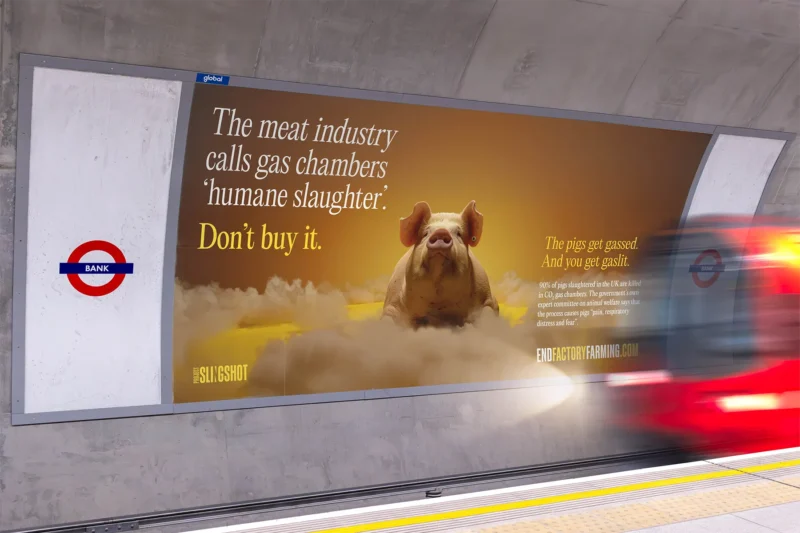
Power the Slingshot
Your monthly gift funds high-impact billboards, PR stunts, and campaigns that expose Big Ag and help us to bring down factory farming.