Slaughterhouses make victims of people, too
Slaughterhouses cause suffering and fear to animals but they also cause physical injury and psychological trauma to workers, their families, and whole communities.
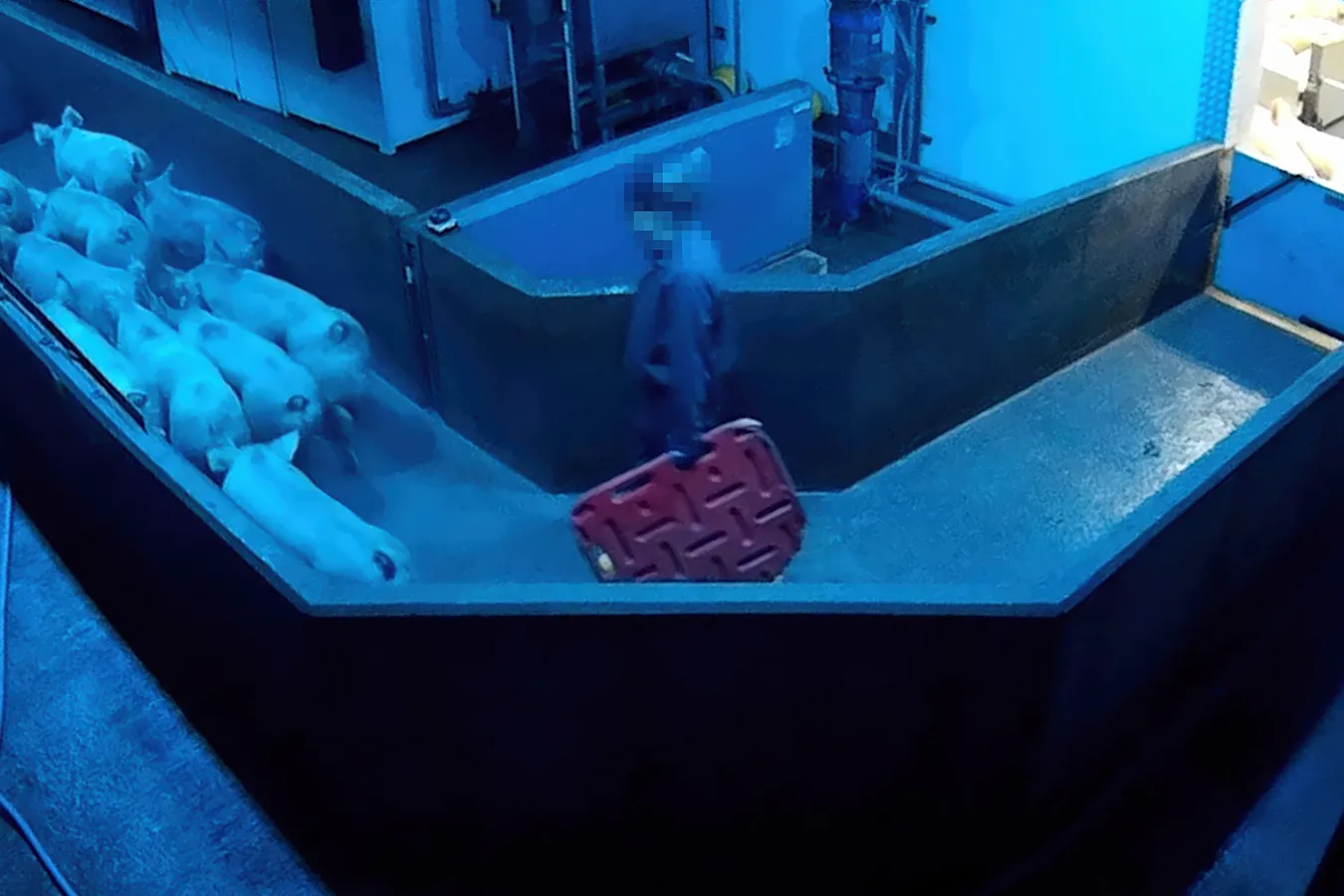
More than a billion land animals enter UK slaughterhouses each year. Many are already in pain, lame or sick. Others are pregnant or gave birth in the truck that took them there. Some are stunned using electricity, some are not stunned at all, and some get gassed to death in highly aversive CO2 gas chambers. When we consider victims of slaughterhouses, it is natural to think of animals, but what about slaughterhouse workers themselves? And research is increasingly showing that families, whole communities, and wider society are also affected by slaughterhouses.
The physical dangers of slaughterhouse work
Slaughterhouses and meat-processing factories are among the most dangerous workplaces in Britain.
Long hours, repetitive work, moving machinery, the presence of toxic chemicals and gases, the slaughter line moving too fast, sharp knives and captive bolt guns make a dangerous combination. Operating or cleaning machines on the slaughterhouse floor carries the risk of crushed hands, amputations, burns, and blindness. In the UK in one year, there were 100 serious injuries including damage to eyesight and crush injuries. When things go badly wrong, people die.
Among the recent injuries are:
- A worker suffered such an enormous electric shock at Bernard Matthews’ meat processing plant that both his shoulders were fractured and dislocated.
- A worker was left with a pierced lung, several broken ribs, four fractured vertebrae, and a spinal bleed, and was left paralysed at the Bernard Matthews’ factory.
- A worker fell and fractured his skull at a Cranswick plant.
- A worker at Cranswick had a hand severed after it became caught in the rotating knives of an industrial meat tenderiser.
- Another worker lost their fingertips at the same site.
- A man sustained a punctured lung, fractures to his back, and several fractured ribs at a 2 Sisters site.
- Also at 2 Sisters two workers had a finger severed in separate incidents.
- Two Karro Foods employees sustained serious injuries including fractured ribs, a punctured lung, a fractured skull, and injuries which caused problems with balance, memory, and mental health.
- A worker was crushed by a forklift at a Moy Park plant and left with life-changing injuries.
- Two workers died from asphyxiation after a nitrogen build-up at Banham Poultry’s slaughterhouse in Norfolk
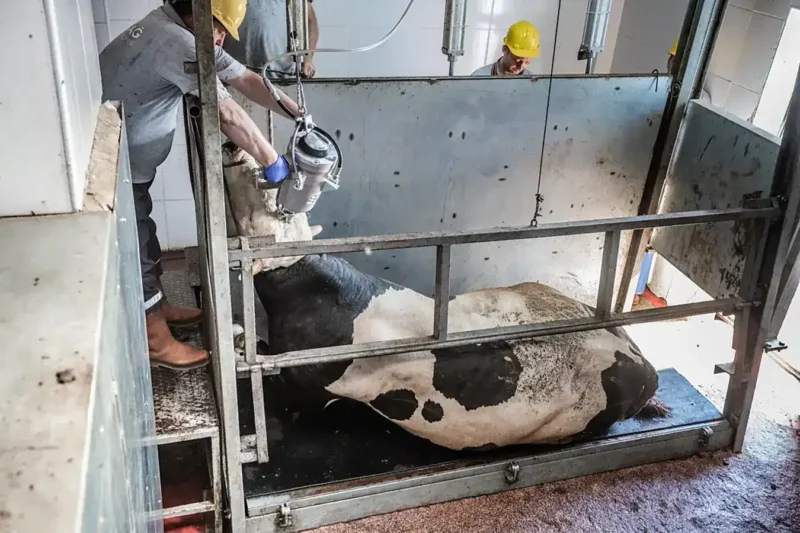
Mental health risks for slaughterers
Alongside the very real physical dangers, every study conducted has found that slaughterhouse workers have lower levels of psychological wellbeing linked to a variety of mental health disorders, including PTSD and PITS (perpetration-induced traumatic stress).
Slaughterers may suffer from paranoid nightmares about their work, with feelings of guilt and shame recurring. Depression is not uncommon. Suicide and suicidal thoughts have been reported.
Those who work directly on the slaughter line were found to exhibit higher rates of mental health problems but the impacts are not confined to them and anyone working in that environment may be affected. The prevalence of depressive symptoms among female poultry processors has been found to be 80% higher than among other working women, even adjusting for variables.
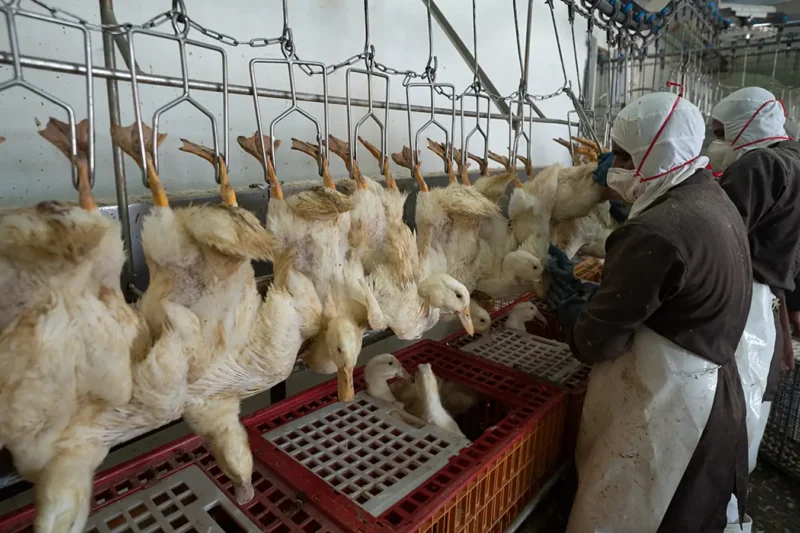
Impacts on communities and society of slaughterhouses
Workers need to find coping mechanisms and these can be positive (sport, family, hobbies for example) but they can also be negative. Drinking alcohol excessively and drug use are common coping mechanisms. And these may make the impacts even worse.
Slaughter work has been connected to an increase in crime rates, including higher incidents of domestic abuse. It has also been linked to an increase in sexual violence and rape, making individuals, families, and communities less safe.
But should any of this come as a surprise? To receive their paycheque, slaughterers must dispassionately cut through flesh, open arteries and veins, and dismember carcasses, including of babies and pregnant mothers. When the reality of it hits them, people either leave or they must quickly become desensitised to the violence that they are paid to inflict. But switching off empathy can have dire consequences for other parts of their lives, and for their families, communities, and the rest of society.
Dr Chi-Chi Obuaya, a consultant psychiatrist at a London mental health hospital, likened slaughterhouse work to child soldiers, forced into a conflict situation in which they have to commit horrific acts of violence.
There are more victims of slaughterhouses than we might first think.