The best of British farming
Food labels are so misleading that, even if it says British, the product still may not be. This is who really owns Britain’s farms.
We truly have a lot to be proud of in this country. The NHS. Shakespeare. The first four-minute mile. Banoffee Pie. One thing we’re all encouraged to be proud of is our farming heritage and the high-welfare standards we afford to animals on British farms.
OK, yes, we do still confine hens and pregnant sows in cages. And mutilate animals without pain relief. And yes, we do gas animals to death inside gas chambers. So, those standards may not be that high, after all. But one thing most people do agree on is that we should buy British produce and support British farmers.
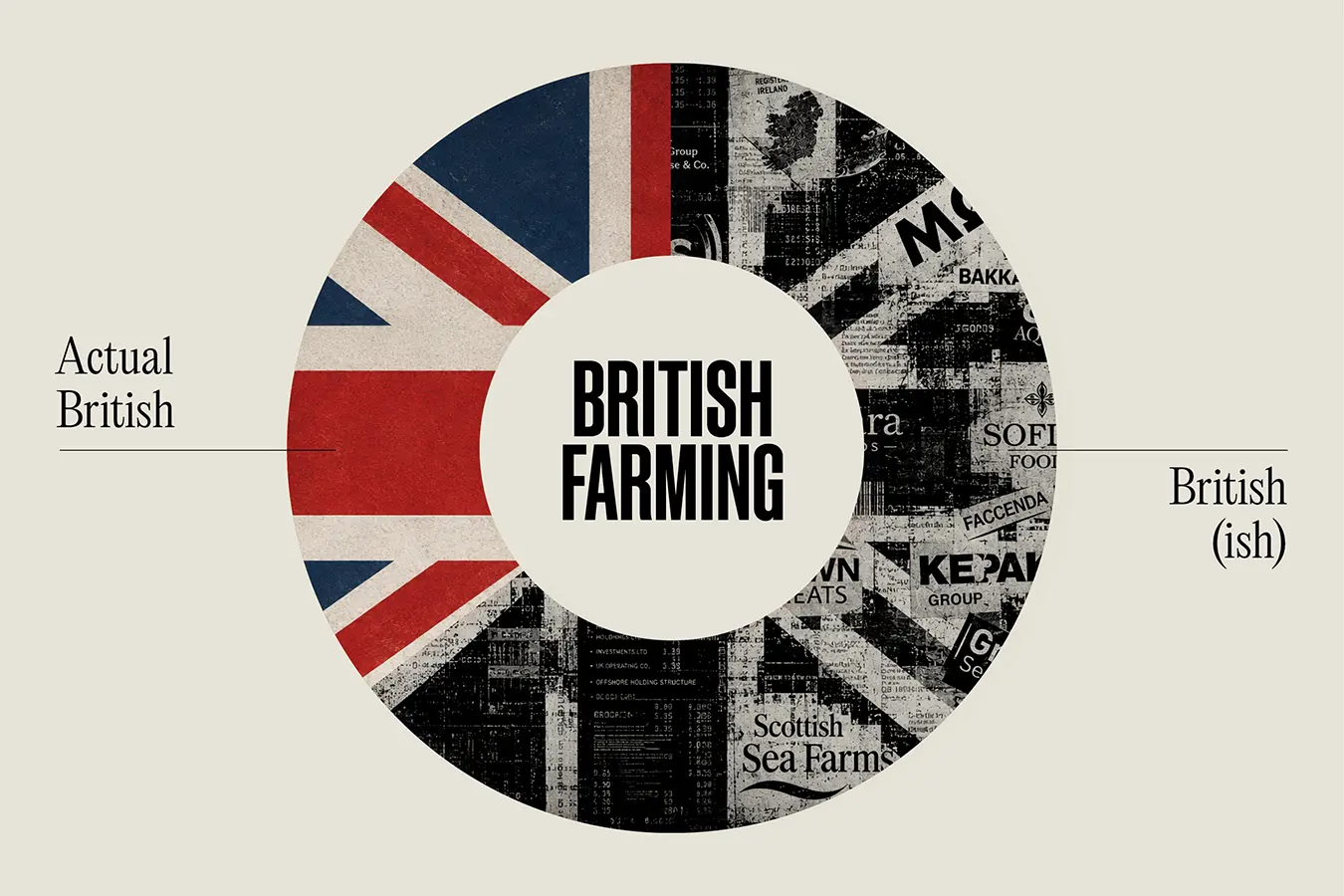
Except, it turns out, much of the British farming system isn’t actually British but under foreign ownership and not all the products marked as British are British.
So, here’s a big question to start… Who owns Britain’s farms?
Who owns Britain’s farms?
Overseas-controlled companies account for an estimated 40% of the UK meat market, over 50% of the dairy market, and almost 100% of the “Scottish” salmon market.
The sector’s opacity — driven by private ownership, unlimited company filings, and cross-border operations — makes precise market share analysis difficult, but we believe these figures are representative of who owns Britain’s farms.
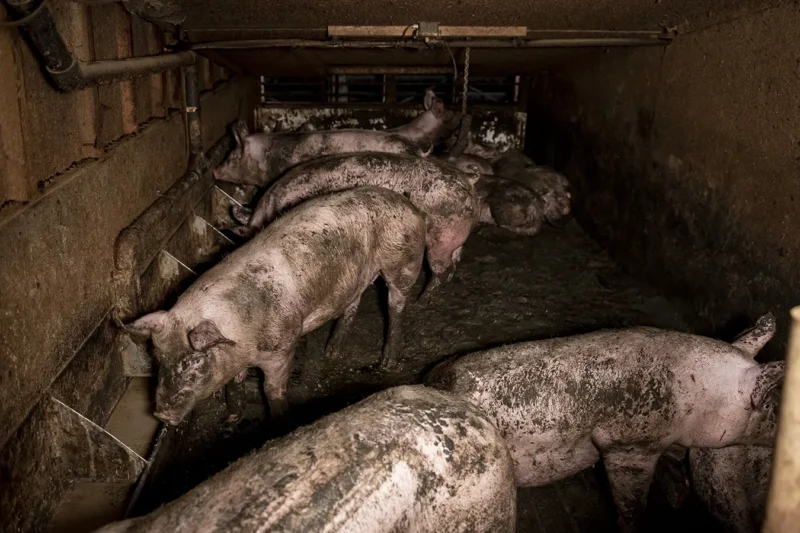
Who owns Britain’s pig farms?
Three companies dominate the UK pork sector, controlling 90% of production between them:
- Cranswick: UK-owned, but publicly traded with its major shareholders being BlackRock Inc (USA), The Vanguard Group (USA), JPMorgan Chase (USA), Schroders (UK), aberdeen plc (UK), and Invesco (USA).1
- Pilgrim’s Europe: owned by JBS, which is a Brazilian industrial farming giant with links to Amazon deforestation, and whose CEO has been twice jailed for corruption.2
- Karro: owned by Sofina Foods, which is owned by Canadian billionaire, Michael Latifi.
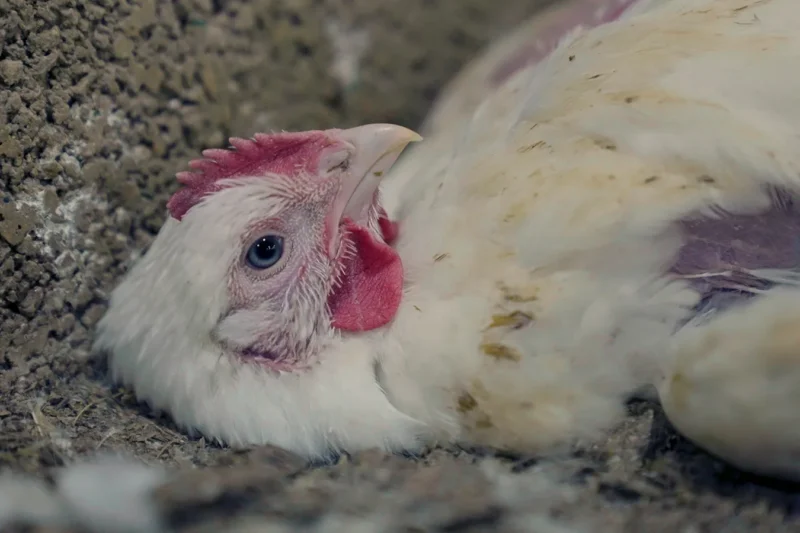
Who owns Britain’s chicken farms?
Just three companies dominate the UK poultry sector:
- Moy Park: owned by Pilgrim’s Europe, which is owned by Brazilian agribusiness giant JBS.
- 2 Sisters Food Group: a British factory-farming company, owned by billionaire Ranjit Singh Boparan.
- Avara Foods: a collaboration between US agribusiness giant Cargill and the British-owned factory-farming corporation Faccenda.
Who owns Britain’s beef farms?
Three companies dominate the UK beef sector, none of them British:
- ABP Food Group: owned by meat billionaires, the Goodman family from the Republic of Ireland.
- Dunbia: owned by Dawn Meats, a company from the Republic of Ireland.
- Kepak Group: owned by the Keatings, an agribusiness family from the Republic of Ireland.
Who owns Britain’s dairy farms?
Dairy is less consolidated but nonetheless, two dairy companies account for 40% of the UK dairy industry’s turnover:
- Arla: owned by a Danish-Swedish cooperative.
- Müller: owned by the German company Unternehmensgruppe Theo Müller.
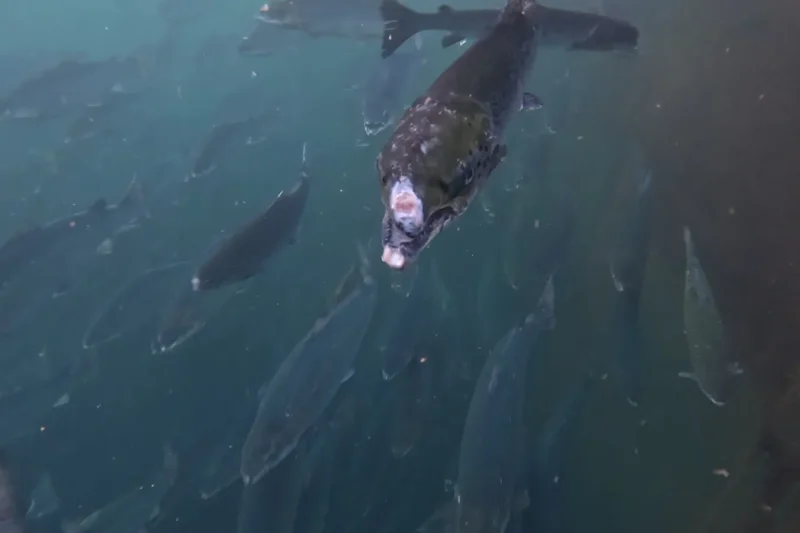
Who owns Scotland’s salmon farms?
Five companies account for almost 100% of the “Scottish salmon” sector. None of them are British:
- Bakkafrost: Factory-farming corporation based in the Faroe Islands.
- Cooke Aquaculture: a Canadian company (which seems to pollute no matter where it goes).
- Mowi: Norwegian-owned with major shareholders including Vanguard Group (USA), BlackRock Inc (USA), Legal and General Group (UK), Citibank (USA), and JPMorgan Chase (USA).
- Scottish Sea Farms: Owned jointly by two Norwegian salmon farming corporations.
- Grieg Seafood: Another Norwegian-owned factory-farming company.
How do we buy British?
Foreign ownership is a defining structural feature of the British farming industry and buying British is harder than you might think. And it takes additional effort to find truly British products that are not created within the filthy, toxic, shit-encrusted, factory farming system because that is where at least 85% of all meat, milk, and eggs come from.
The information we need is not available in the supermarket so many of us rely on the presence of a Union Jack flag to denote a British product. This is a big mistake.
Products can display the Union Jack flag and be marketed as British even if the key ingredients are from overseas, so long as this is clarified elsewhere on the packaging. But it could be on the back in small print. Very small print. So, how do we avoid sending profits overseas to billionaire factory-farming corporations or even to UK-based, hedge fund-backed, factory-farming corporations?
The system is so opaque, the marketing so misleading, and the businesses so convoluted that the only way to be 100% sure that you know what you are getting — and what you are funding — is to go to the farm and see for yourself. Everything else is guff and spin.