Ammonia Pollution
Human health impacts of factory farm air pollution.
of UK ammonia emissions come from farming
of UK agriculture’s ammonia emissions come from beef and dairy cows
of of UK agriculture’s ammonia emissions are from poultry production1
What It Is
The hundred of millions of animals trapped inside the UK’s factory farms produce an eye-watering amount of waste, which in turn produces a very literal eye-watering amount of air pollution. And stinging eyes is by no means the worst that workers and local residents must contend with.
Once in the air, ammonia reacts with other pollutants and forms fine particulate matter. This is one of the most harmful air pollutants to human health because it can cause cardiovascular disease, respiratory disease, lung cancer, stroke2, and premature death. One woman unlucky enough to live close to a chicken farm described living with a tightness in the chest, eye irritation, and breathing difficulties.3
Ammonia pollution also damages sensitive habitats such as woodlands and heaths, while driving the eutrophication of waterways, which kills aquatic life. And spare a thought for the poor animals who are stuck inside those polluted sheds all their lives. Chickens, who are forced to grow so fast they are often unable to stand up, may endure painful burns to their skin from having no choice but to sit in the ammonia-filled waste.
Workers. Communities. Animals. Rivers. Habitats. Wildlife. Everyone suffers so Big Ag bosses can bank their millions.
What They Do
Sensitive Content
This video contains content that some people may find upsetting
Impact
Human deaths
Living near a factory farm has been shown to raise the risk of death.4
Wildlife deaths
Ammonia pollution drives eutrophication and loss of aquatic wildlife.
Habitat deaths
Ammonia has a “direct toxic effect on vegetation”.5
Hall of Shame











Investigation and Reports
The ammonia pollution problem
Ammonia map
Ammonia emissions from agriculture and their contribution to fine particulate matter: A review of implications for human health
References
- 1. https://ahdb.org.uk/knowledge-library/ammonia-emissions-on-dairy-farms
- 2. https://www.ciwf.org/media/31tfurjm/the-ammonia-pollution-problem-april-2026.pdf
- 3. https://wickedleeks.riverford.co.uk/news/the-agtivist/the-agtivist-local-residents-suffer-ill-effects-of-air-pollution-near-intensive-farm-hotspots/
- 4. https://pubmed.ncbi.nlm.nih.gov/35189407/
- 5. https://royalsociety.org/~/media/policy/projects/evidence-synthesis/Ammonia/Ammonia-report.pdf
Take Action
-
 Frankenchickens
Ban Frankenchickens in the UK
Tell the Secretary of State at Defra to ban factory-farmed and fast-growing chickens known as Frankenchickens.
-
 Frankenchickens
Ask Your MP to Take Action
Ask why Frankenchickens are legal, when it’s unlawful to farm animals that will suffer because of how they have been bred.
-
 Factory Farming
End Factory Farming by 2040
It's time to bring it all down. Tell the government to block new factory farms and ban factory farming by 2040.
-
 Gas Chambers
Ban CO2 Gas Chambers for Pigs
Tell the Secretary of State at Defra to ban the use of CO2 gas chambers for pigs.
-
 Gas Chambers
Ask Your MP to Take Action
Ask why CO2 gas chambers are legal when the government’s Animal Welfare Committee recommends phasing them out?
-
 Gas Chambers
Tell Tesco to Drop CO2 Gas Chambers
Tell Tesco to stop selling meat from pigs killed in CO2 gas chambers, and commit to honest, transparent labelling.
-
 Gas Chambers
Tell McDonald’s to Drop Gas Chambers
Tell McDonalds to stop sourcing pork from pigs killed in CO2 gas chambers, and be transparent about slaughter methods.
-
 Donate
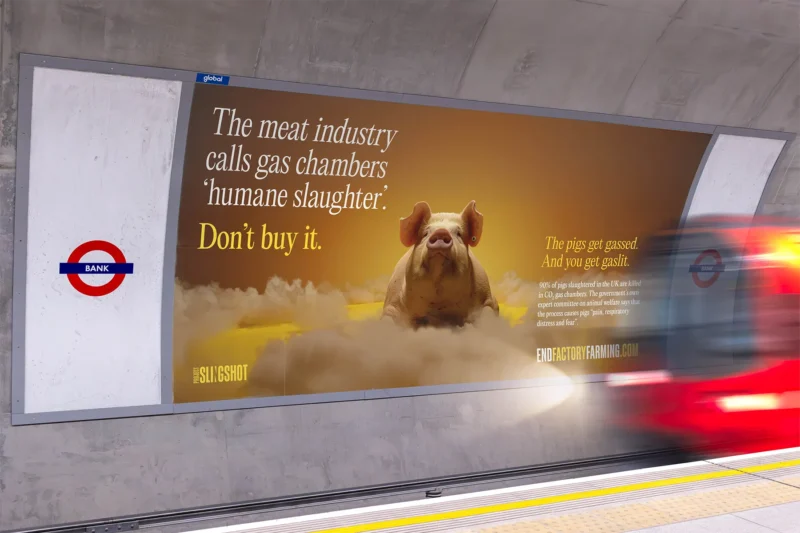
Power the Slingshot
Your monthly gift funds high-impact billboards, PR stunts, and campaigns that expose Big Ag and help us to bring down factory farming.