The real cost of cheap chicken?
UK taxpayers are footing the bill for poultry disease outbreaks, despite biosecurity breaches on some farms.
The Headlines
- More than £200 million of public money diverted to help UK poultry sector following avian flu outbreaks
- £94 million in handouts to producers
- £117 million spent destroying birds and cleaning up contaminated premises
- Some infected farms were found to have poor biosecurity, exacerbating the spread of disease and raising questions about wider hygiene standards
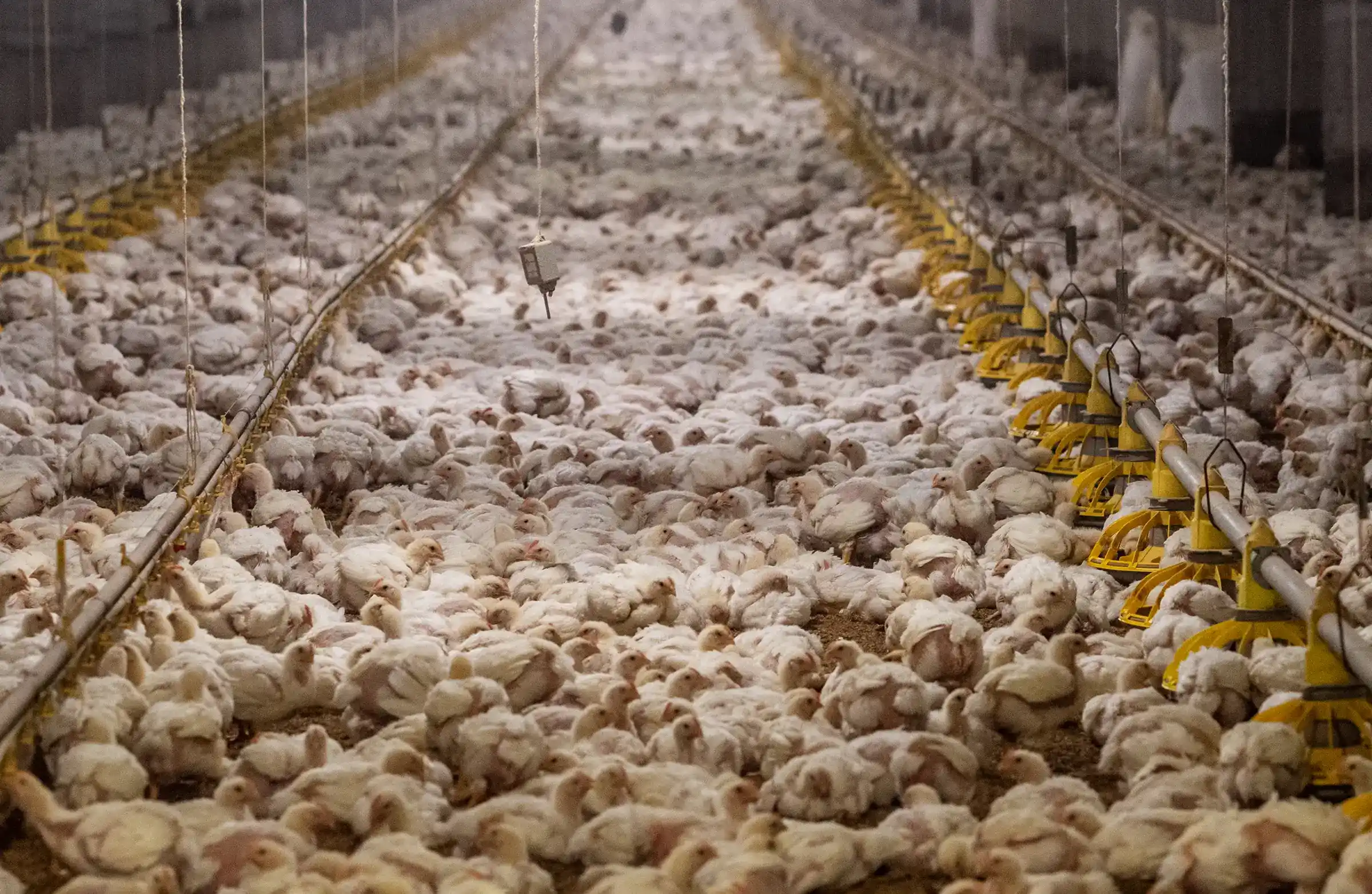
Cheap chicken is everywhere: from supermarkets and fast-food restaurants to cafes, pubs and in the canteens of thousands of schools and hospitals across country.
As the industry behind this vast, sprawling business likes to remind us, chicken is an affordable way to feed the country. Indeed, you can pick up a pack of drumsticks for as little as £1.50 if you know where to look. It’s a similar picture with eggs, which are increasingly marketed as a low-cost source of protein, with a box of six able to be bought at some retailers for just 99p.
But are we being told the full story?
Recent headlines have revealed how the taxpayer has been footing the bill to prop up the poultry industry, whether it’s large sums of public money paid out in subsidies to industrial farms, or generous handouts to incineration companies disposing of the colossal volumes of toxic waste generated by rearing more than a billion birds in the UK annually.
Millions of pounds of taxpayers cash has also been spent in the wake of disease outbreaks on British poultry farms.
Now, an investigation has established that millions of pounds of taxpayers cash has also been spent in the wake of disease outbreaks on British poultry farms, including compensation payments to producers, and money used to cover the enormous cost of destroying millions of birds and cleaning up contaminated premises.
Documents obtained by Slingshot Investigates reveal how more £200 million of public funds were funnelled into dealing with outbreaks of avian influenza (often known as bird flu), which has swept through the UK in recent years. The funds included some £94 million in payoffs to producers, and around £117 million spent on bird culling.
The unpublished figures, which cover England, Wales, Scotland and Northern Ireland and span the period 2020 to 2026, were obtained using Freedom of Information (FOI) requests to devolved regulatory agencies. England saw the largest amount of public money spent on dealing with avian influenza, the data shows, totalling some £177 million, followed by £22 million in Scotland, nearly £8 million in Wales and more than £4 million in Northern Ireland.
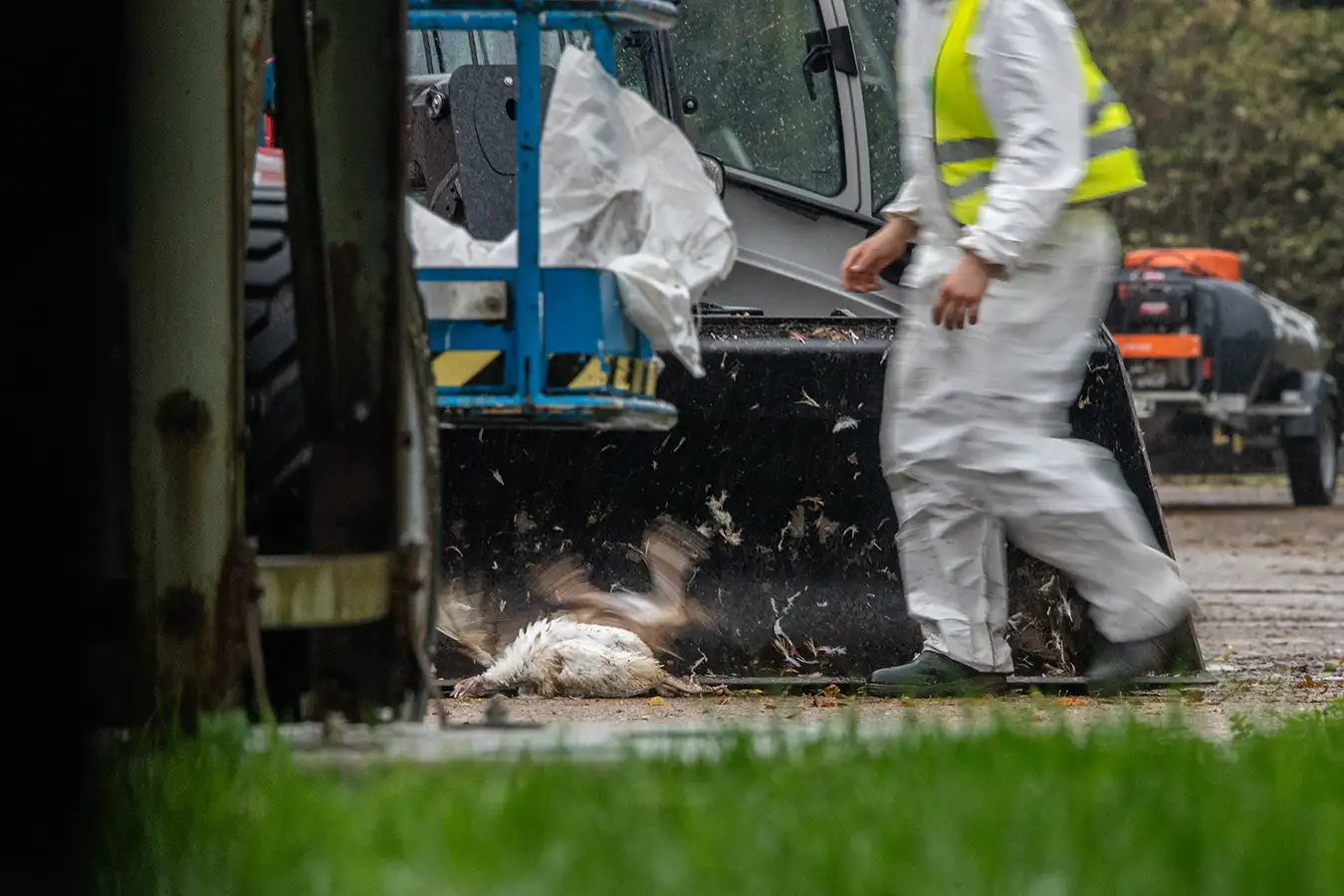
As well as the compensation payments, which were made to hundreds of individual producers1 for birds destroyed, the internal Government records show that the clean up bill covered the costs of physically culling flocks2 , known as “depopulation” – which typically involves the pumping of gas into sealed sheds – as well as paying for the removal and disposal of carcasses, transport, cleaning and disinfection, veterinary oversight, equipment hire, security and testing.
Biosecurity breaches
Our investigation – part of a wider cross-border exposé of industrial chicken farming in Europe publishing today – has also uncovered that some poultry farms at the centre of avian influenza outbreaks in this period were found to have poor biosecurity standards, potentially exacerbating the spread of disease at individual premises and in some cases spreading it to further farms.
Inspection reports revealed some farms contaminated with avian influenza were not following biosecurity rules.
In order to prevent and limit the spread of disease, poultry producers are expected to take a number of measures. These include keeping – where possible – farmed birds isolated from wild birds (which frequently carry the virus), maintaining farm buildings to a good standard to prevent water leaks and incursions by wildlife, and ensuring high levels of cleanliness and hygiene. Others include recording the movements of people onto the property and ensuring staff follow strict biosecurity protocols, such as the use of disinfectant footbaths and dedicated protective clothing.
Yet an analysis of inspection and enforcement reports found that in some cases farms contaminated with avian influenza were not following the rules.
For example, at one turkey farm in Lincolnshire, inspectors reported that biosecurity was “generally very poor, with multiple opportunities for direct/indirect contact with infected wild birds. The entrance to the farm did not have a barrier. Buildings were not purpose made for poultry and were poorly maintained. There was a pond (with wild ducks) near the houses and several water-filled ditches. Roofs were heavily covered in moss. These factors would have attracted wild birds.”
Inspectors also recorded that whilst there were foot-baths [with disinfectant] at the entrance and inside the sheds, some areas were “very untidy and dirty”. They concluded that it would be “very unlikely that effective biosecurity could be achieved with these facilities.”
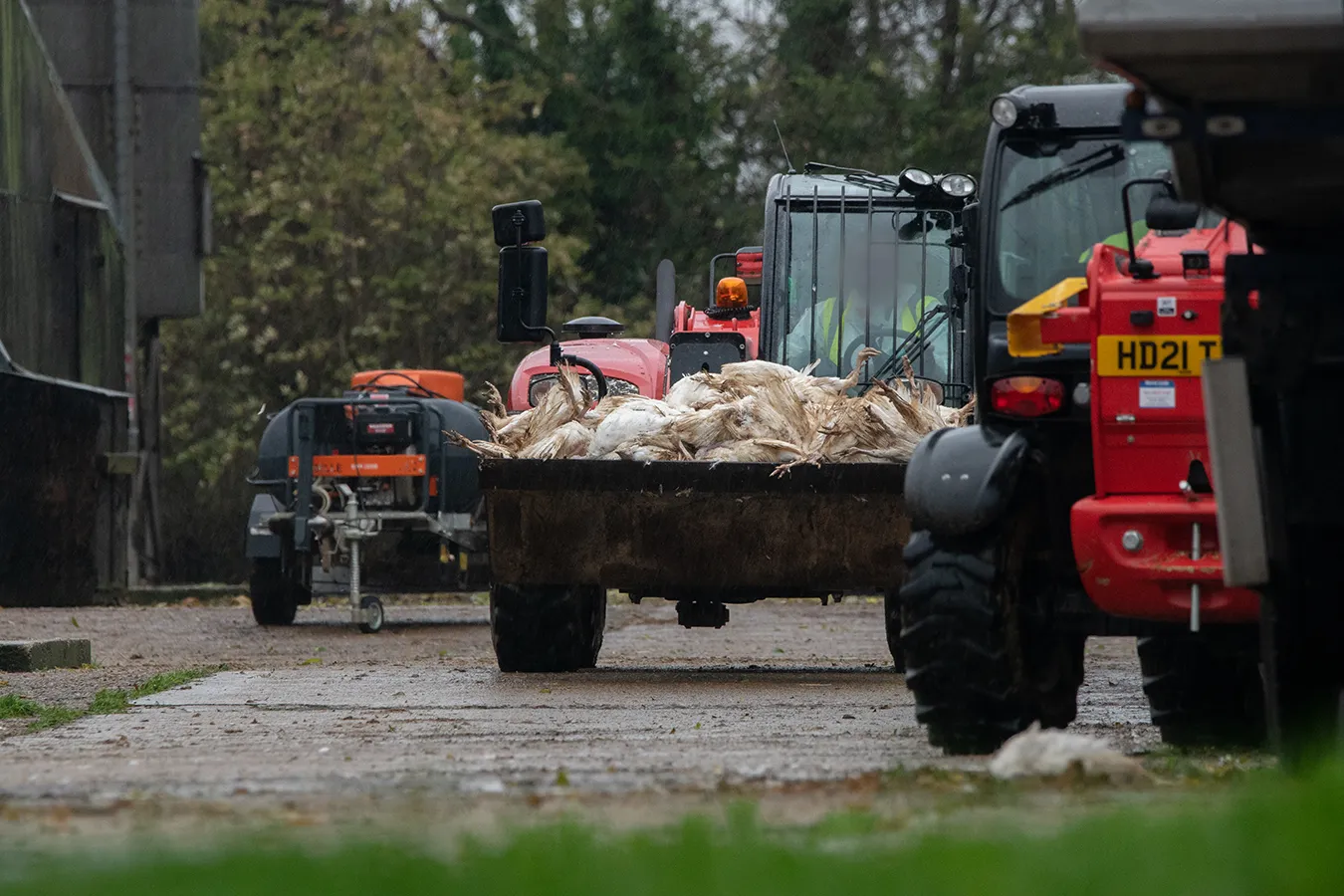
Similarly, at a duck fattening unit in Suffolk, inspectors discovered that there was “no effective bio-secure outer-shell to the [infected premises].” The entrance from the road was found to be open with and no vehicle [cleaning and disinfectant point]. Wild birds had easy access to some poultry houses, inspectors said. Ducks were also found to be “walked across the yard to [other] houses. While this was unlikely to have been the source of infection it was an indication of poor biosecurity.”
At another farm rearing chicken, duck and goose in the East of England, inspectors found that whilst there was a knapsack sprayer for disinfection of vehicles entering via the farm track, “within the site, biosecurity was poor. Foot dips were present but uncovered and there was uncertainty about whether the dilution rate was adequate.”
There was no change of footwear or overalls for staff moving between poultry sheds, inspectors found. It was also reported that there “was more animal by-product [dead birds and parts] than would be expected” due to the on-farm slaughtering. The storage of this was deemed “less than optimal.” Straw was found to be stored unwrapped in an open-sided barn. “Feed and water troughs were not covered and easily accessible by wild birds.”
“Biosecurity is national security”
Responding to the findings, Andrew George, MP for St Ives, told Slingshot Investigates: “The Government should make clear that commercial poultry keepers who fail to meet mandated biosecurity standards may find themselves billed for all of the costs of responding to pathogen outbreaks on their premises. Unless the Government issues a clear warning to such commercial poultry keepers, there is a risk that they will simply believe that they will be bailed out if and when an outbreak occurs.”
Dr Neil Hudson MP, the Shadow Biosecurity Minister, said: “Biosecurity is national security. Compromised biosecurity affects everything from animal and bird health, public health, to the price of food, trade, to our position on the world stage and our precious environment.
Hudson, himself a qualified vet, said that the findings also highlighted the need for continued investment in the country’s biosecurity, including further redevelopment of the Animal and Plant Health Agency’s (APHA) key laboratory in Weybridge, Surrey.
The MP warned that the current Labour Government “ must take biosecurity seriously”, and needed to invest in “testing capability, vaccine development and timely and up-to-date communications with the poultry sector and bird keepers so that we can maintain the strongest barriers possible,” he said.
Erik Millstone, Professor of Science Policy at the University of Sussex said that he believed it would make sense to “penalize” farmers for bad biosecurity, “but that should be in proportion to their shortcomings.”
Richard Griffiths, Chief Executive of the British Poultry Council (BPC) said: “Good biosecurity and robust surveillance and reporting are the ways to reduce risk, and ultimately the cost, of avian influenza.” He said that no farm that has had an outbreak due to neglect of biosecurity should be allowed to restock “until good standards are met and we have confidence they will be maintained.”
He noted that compensation was only paid out for the culling of healthy birds for the purposes of disease control.
A Defra spokesperson said: “Poultry farmers have an important part to play in protecting their birds from this devastating disease, but it is also crucial surveillance, diagnostics, research and outbreak response is funded. This money safeguards our food security, protects livelihoods and supports an industry which contributes over £8.5 billion a year to our economy.”
They added that biosecurity on poultry farms had “widely improved” with the “vast majority” of poultry farms not becoming infected premises. They highlighted the government’s roll out of a new set of Poultry Biosecurity Reviews earlier this year, which include a funded vet visit providing an assessment and follow up recommendations to poultry farmers on their biosecurity.
Bird flu: a global menace
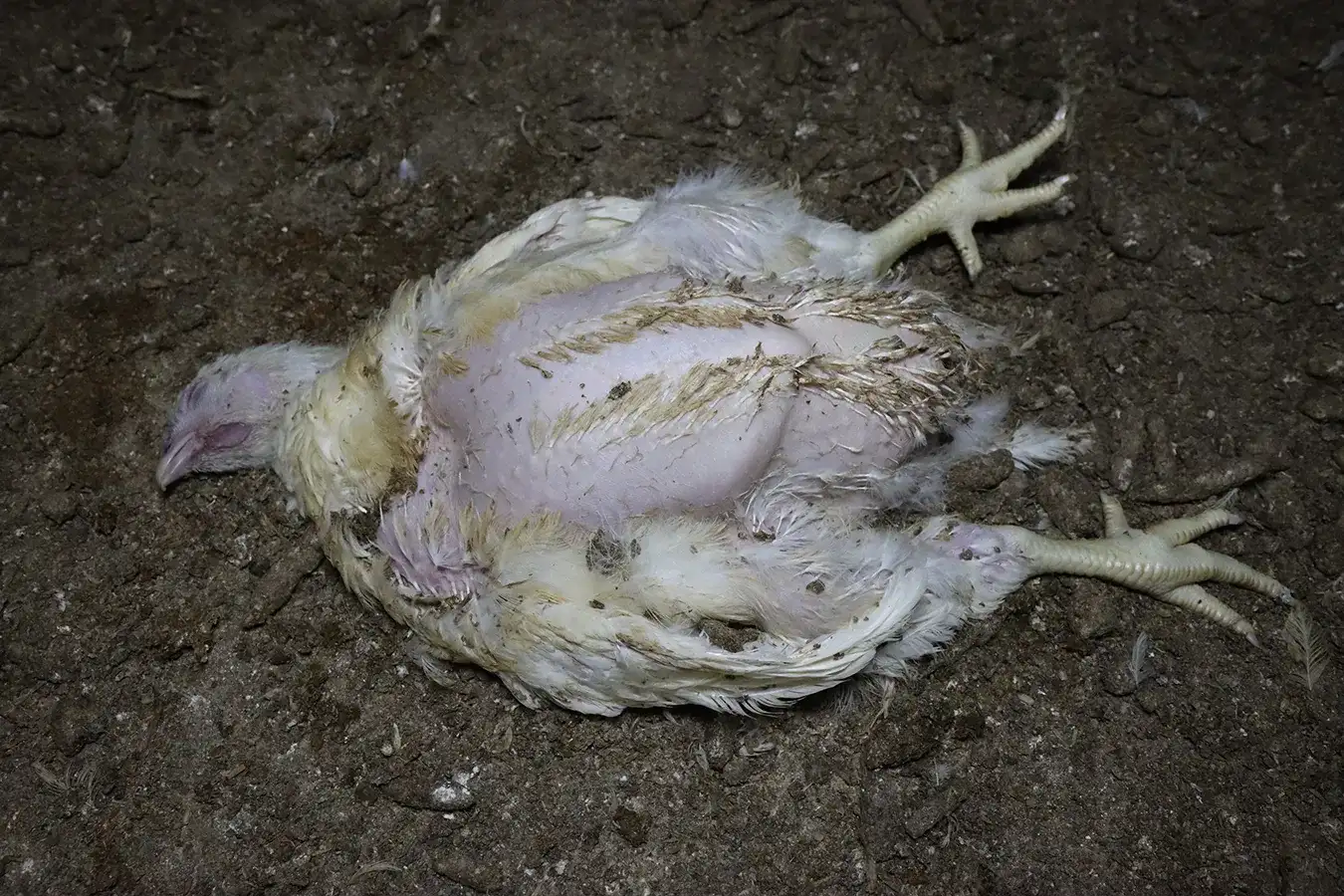
Avian influenza outbreaks have sparked growing alarm not just in the UK but around the world in recent years . Since October 2021, an unprecedented number of outbreaks have been reported across multiple regions, spreading into new areas, impacting animal health and welfare and, according to some experts, posing a risk to humans.
The impact extends far beyond farmed birds. Large numbers of wild birds have died, while the virus has also infected a range of other wildlife, including land and marine mammals.
Although avian influenza primarily affects birds, some strains, such as one known as H5NI, can infect mammals, including humans. Increasing numbers of H5N1 infections have been detected in both terrestrial and aquatic mammals, raising concerns about the potential consequences for animal health, wildlife and biodiversity, as well as public health.
The spread of H5N1 among mammals is particularly concerning because it creates opportunities for the virus to adapt to mammalian hosts. Some species, such as mink, could also act as hosts in which different influenza viruses mix, potentially allowing new strains to emerge that could pose a greater threat to animals or humans.
A number of different strains of the disease have been recorded in the UK in recent years, including outbreaks involving so-called high pathogenicity avian influenza (HPAI) which in turn includes includes H5N1, as well as H5N5, and three low pathogenicity avian influenza episodes (H7N3, H5N3 and NHN1). HPAI strains concern scientists the most because of the near-total mortality recorded in affected flocks.
“When bird flu gets into farms, it tears through flocks, and entire sheds are gassed as part of the clean-up.”
Campaigners and experts warned that the expansion of industrial farming in the UK had increased the risk of disease outbreaks. Naomi Hallum, CEO and co-founder of Project Slingshot, said that vast flocks “were often packed into sheds, with workers, vehicles and equipment moving between sites. When bird flu gets in, it tears through flocks, and entire sheds are gassed as part of the clean-up.”
She continued: “Bird flu is not simply an act of nature. It warns of the vulnerability of an industrial system built on confining enormous numbers of animals together. Public money should be used to build a safer, kinder and more resilient food system, not to underwrite the failures of factory farming.”
Professor Millstone added that Government policies “had long encouraged intensification” in order to keep food prices low, “but while that might keep retail prices relatively low, they are increasing public health costs.”
Anatomy of disease spread at one UK egg producer
A significant outbreak of avian influenza in Lincolnshire saw disease sweep through eight premises all linked to a large egg-producing company. This prompted a detailed investigation by animal health officials who uncovered many apparent biosecurity deficiencies. Inspection records detail their findings:
- Staff working on other sites accessed the canteen [at a particular farm] to clock in for their shift, collect PPE and access lockers and showers; there would have been cross-over between this foot traffic and workers coming from sheds, including the affected enriched colony [caged hen] units. This would have led to the potential for cross-contamination and onward transmission of infection to other farms.
- Staff were seen to not change boots or overalls when moving around the site, and visibly contaminated boots were present in the staff canteen.
- There was evidence across the sites that documented company biosecurity protocols were not being fully or effectively followed. Drivers delivering feed, egg trays and collecting eggs or carcases were not supervised to ensure compliance with biosecurity requirements.
- Visitor books were not present on all sites and where they were they were not always complete such as staff moving between different sites […] did not always record their visits.
- Structural deficits were found on some sites (such as gaps in the building fabric, missing manure belt covers) which could potentially allow ingress by wild birds and rodents).
- Evidence of rodent activity was seen on some sites and some were untidy, potentially providing a habitat/cover for vermin.
- One site stored plastic wrapped bedding outdoors – the wrapping was seen to be visibly damaged and there was evidence of contamination with wild bird faeces.
Inspectors were ultimately unable to pinpoint the source of infection in this outbreak. They concluded that initial delays in the provision of accurate, detailed and clear farm records – specifically staff movements and activities such as egg and manure collections – led to further hold ups in being able to identify and action high-risk tracing investigations in a timely manner and as subsequent premises became infected.
Italy’s chicken culling scandal
These issues are not confined to the UK. In Italy, €266 million in public funds, partially co-financed by the European Union, were allocated by officials in three regions to manage avian influenza outbreaks between 2020 and 2025. Undercover footage collected by Food for Profit exposed how the crisis was subsequently managed in reality: brutal culling violations, biosecurity breakdowns that actively spread the virus, and severe hygiene failures at farms receiving compensation. Among sites documented by investigators were a facility owned by a senior figure within the poultry industry, who publicly requested continued government payouts while catastrophic biosecurity failures were revealed on his own farm, according to Food For Profit.