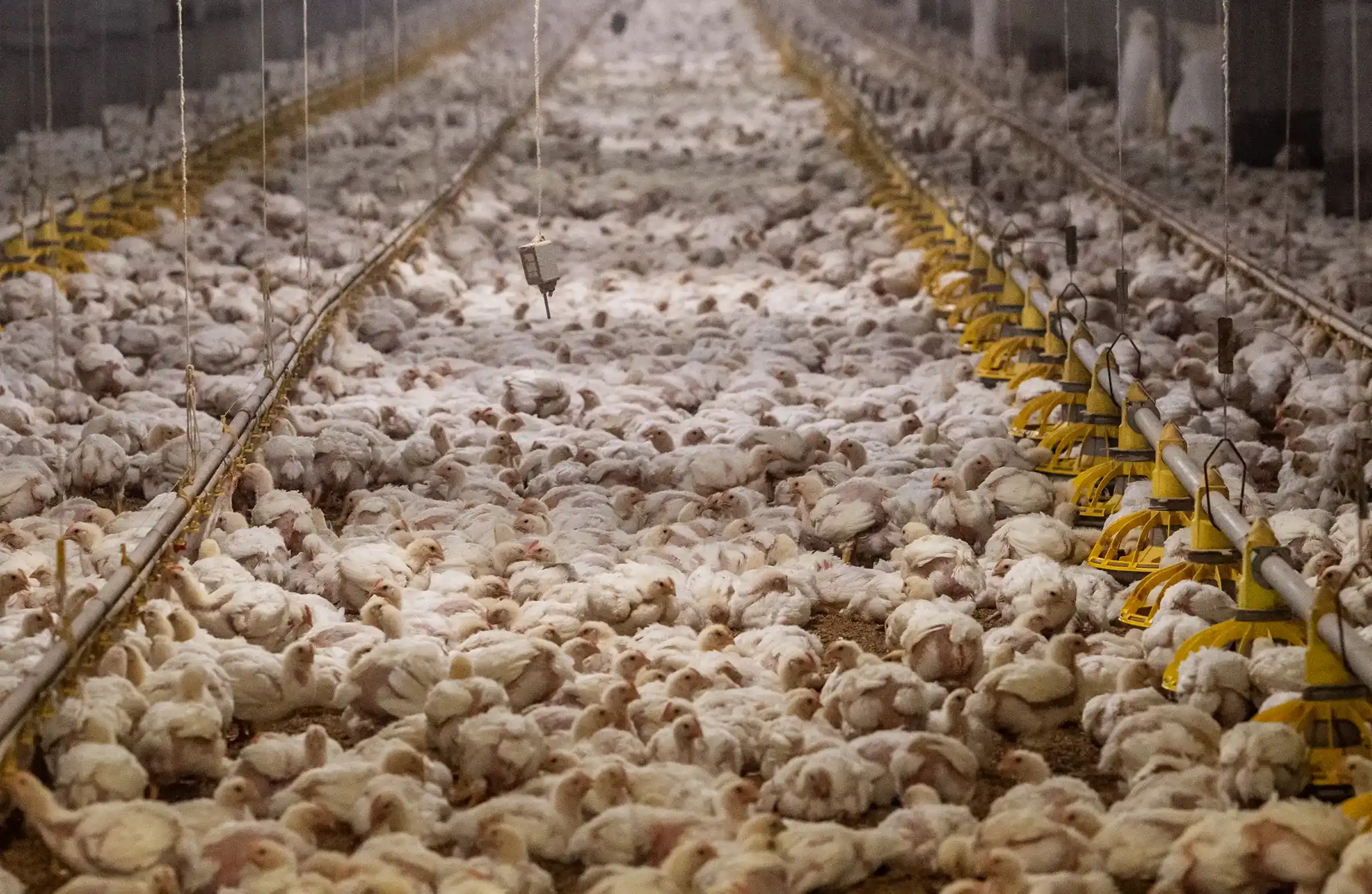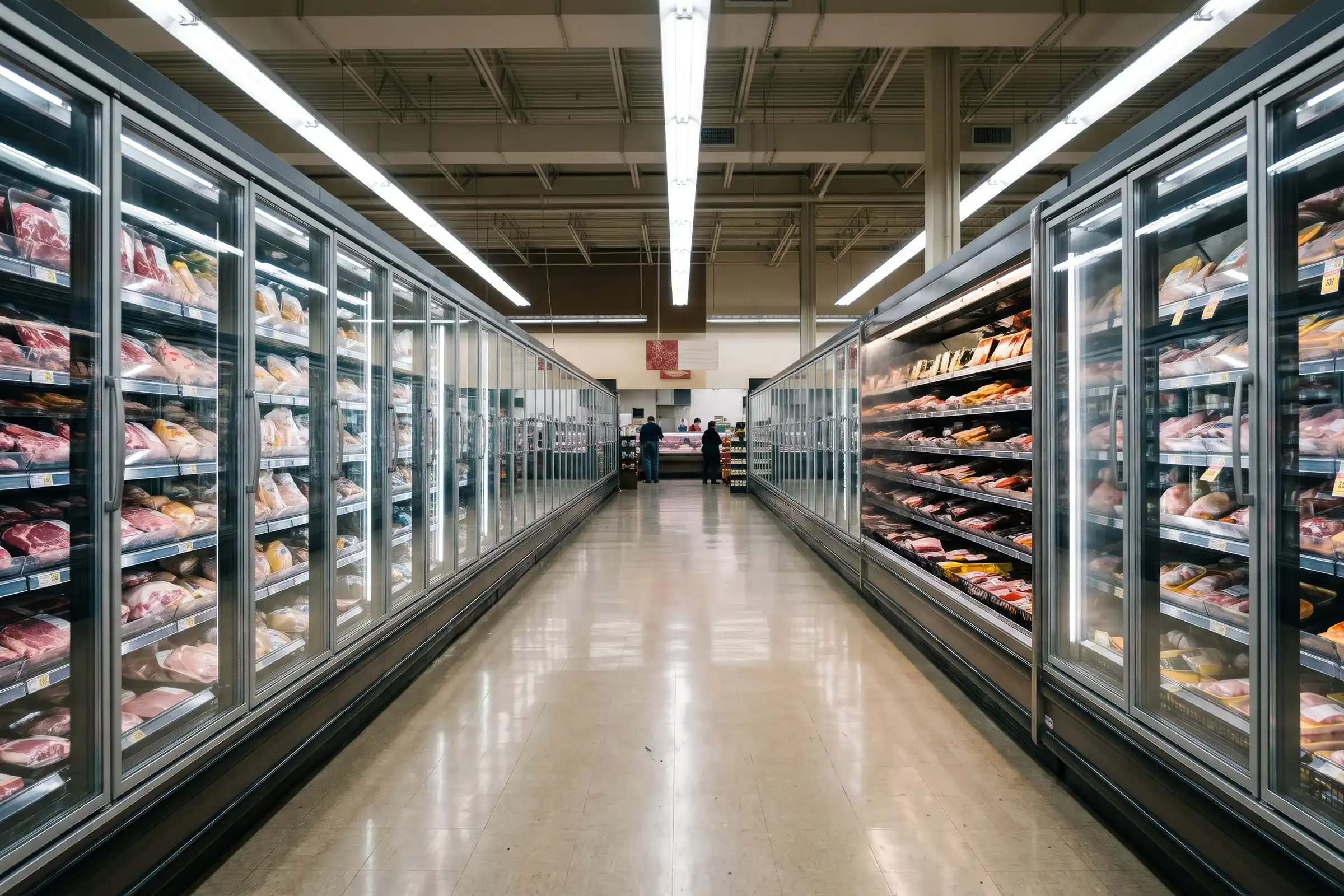
The meat aisle illusion.
Behind the label: how a few companies fill Britain's meat aisle.
How a handful of giant meat companies connect Britain’s supermarkets to industrial scale farms, and the tiny code on every pack that reveals them.
Turn over any pack of supermarket meat and you will find a small oval stamped with a combination of letters and numbers. Most shoppers never notice it but that code reveals something the front of the pack doesn’t. The company that actually made what you are buying.
Project Slingshot decoded the ovals on 913 meat products across nine UK supermarkets: Sainsburys, Tesco, Asda, Morrisons, Aldi, Lidl, Waitrose, Co-op and Farmfoods. We traced each product back to the processor that slaughtered, cut, packed or manufactured it.
The supermarket’s name is on the front. The real producer is hidden in plain sight within that oval. When we traced the codes, the choice on the shelves began to narrow – just 10 companies were behind nearly three-quarters of the products we examined.
Who really made your meat?
When you buy meat at a supermarket, it’s sold under the supermarkets name, but a separate company ‘the processor’ actually prepared and packed it. The processor is the missing link between the farm and the supermarket shelf. It covers everything between a living animal and the plastic-wrapped meat in your trolley: slaughtering, cutting, packing and turning meat into sausages, burgers and ready meals. It is one of the most important businesses in the entire chain, but also one of the least visible. Its name isn’t on the front of the pack, it lies behind a coding system.
Decoding the code
By law, meat processed in the UK and EU must carry an identification mark; a small oval showing where the meat was last cut, processed or packed. It looks like this:
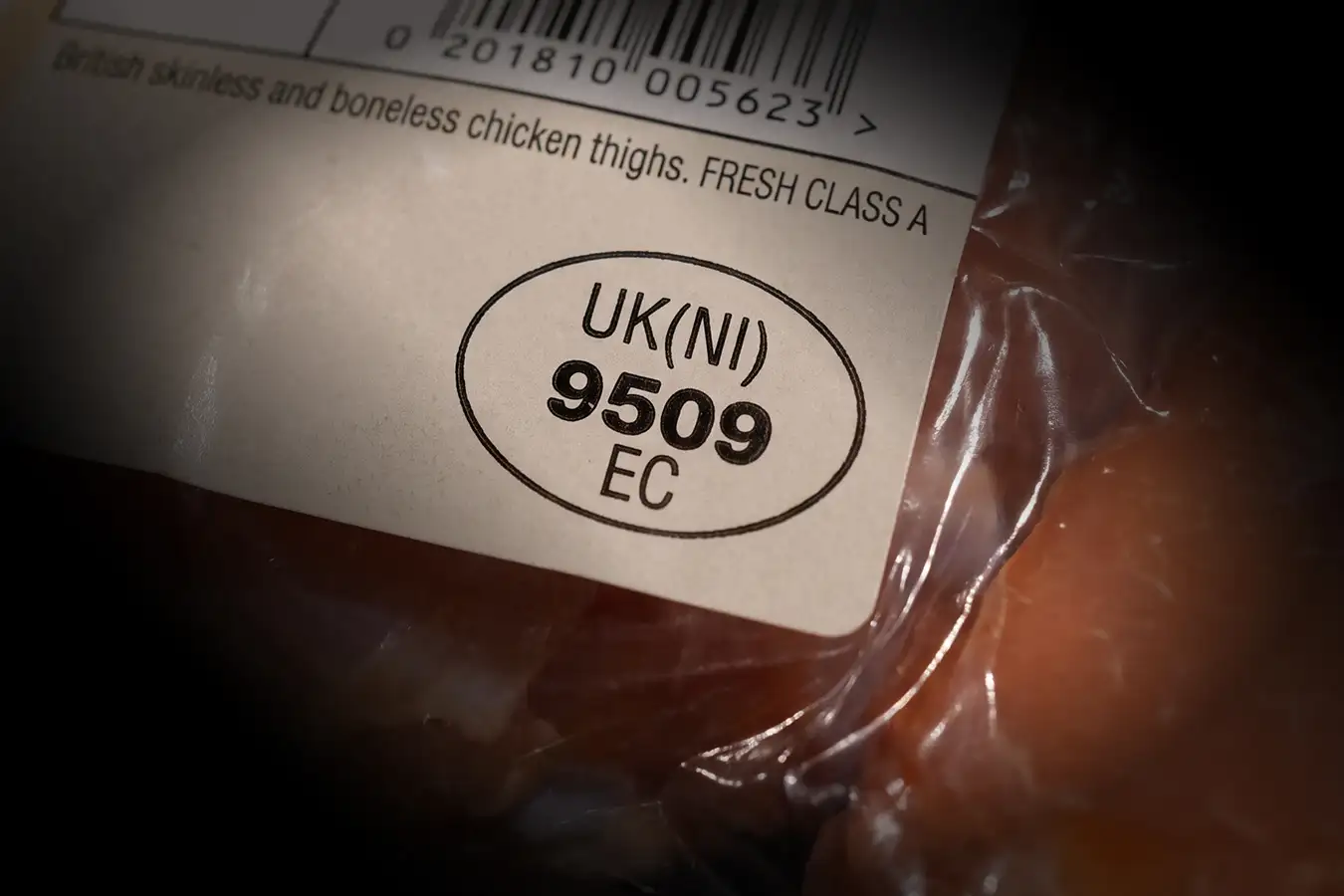
UK (NI) 9509 EC
- UK: the country where the plant is approved. Imported meat shows its own country code instead, such as PL for Poland, CN for China, or BR for Brazil.
- NI: the plant is in Northern Ireland
- 9509: the plant’s unique approval number. Every approved meat plant has one, and anyone can look it up on the Food Standards Agency’s public list of approved premises.
- EC: Shows the plant is approved under European food-hygiene rules. On Polish packs this is displayed as WE, the same thing in Polish.
Looking up this code, you will find it belongs to Moy Park’s plant in Ballymena, one of the UK’s largest chicken processors. Nowhere on the front of the pack will you see the name Moy Park.
This matters because processors can operate at enormous scale, supplying many supermarkets under many different brands.
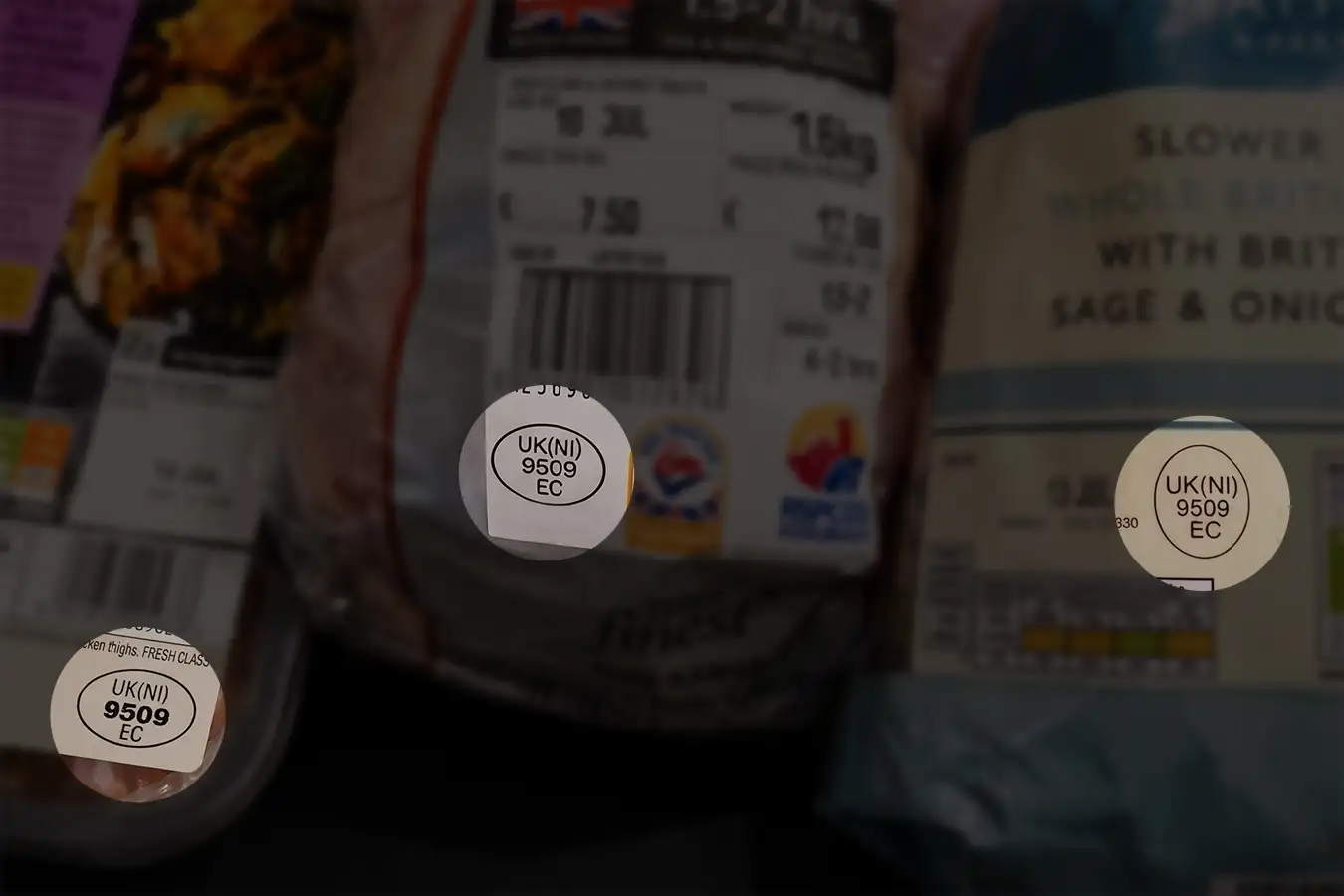
The code appeared on 23 fresh chicken products in our survey, sold at Sainsbury’s, Tesco and Waitrose. They included Sainsbury’s Taste the Difference, Tesco Finest and Waitrose ‘slower reared’ whole British Chicken with pork sage and onion stuffing. Different supermarkets, different branding, different price points and the same processing plant in Ballymena. This isn’t a one off either, Bernard Matthews turkey plant appeared at Aldi, Asda, Morrisons and Tesco. A 2 sisters chicken plant appeared at Aldi, Asda, Co-op and Tesco.
What we found
- 10 companies (processor groups) were behind 72% of the products we examined (658/913).
- Four processors, ABP Food Group, Cranswick, Moy Park and 2 Sisters Food Group accounted for approximately 43% of the products examined.
- Farmfoods accounts for the largest number of overseas-processed products in the sample, (17 of its 39) followed by Aldi(10) and Morrisons (8 each).
- At Waitrose, 93% of examined products that could be traced to a processor came from just three companies: Pilgrim’s Pride, Moy Park and Dovecote Park.
- Fresh and frozen chicken told very different stories. Every fresh chicken product we traced was processed in the UK, while 57% of frozen chicken products with a known plant location was processed overseas, including in Poland and China.
- Retailers overlap far more than their labels suggest. 79% of products came from processor groups that supply at least two of the nine retailers, and just 15 groups supplying three or more retailers account for 68% of products.
- The concentration at processing level sits alongside a UK farming sector that includes almost 2,000 farms classified as industrial scale under the thresholds of farms with at least 40,000 chickens, 2,000 pigs or 750 breeding sows.
- This concentration matters because it can reduce resilience, increase dependence on industrial scale production and make the food system more vulnerable when a major processor has a disruption.
In the UK, consumers spend an estimated £26 billion a year on meat. The market looks competitive, but the supply behind it is dominated by a handful of firms. The apparent competitiveness conceals a supply chain dominated by a handful of firms.
Does the meat aisle really offer a choice?
Walk into a Tesco, an Aldi, Waitrose or a Co-op and you’d be forgiven for thinking you were faced with a real choice. Chicken breasts, pork chops, beef burgers, lamb joints, sausages, mince, ready meals and frozen drumsticks. Own label ranges stacked on the shelves, each with different packaging, different price points and different promises about quality and provenance.
But trace those products back through their oval codes and the picture starts to change. An aisle of hundreds of apparently different products depends on a surprisingly small number of companies. Two of them, 2 Sisters Food Group and Cranswick appeared across six of the nine supermarkets we surveyed.
The pattern was not uniform across supermarkets, however, the scale of some of the processors involved is striking.
- Moy Park processes around 6 million chickens a week, totalling over 300 million birds a year, working with about 700 chicken farms.1
- 2 Sisters Food Group says it processes more than 7 million birds every week in the UK and produces around a third of the chicken-based products eaten in the country.2
- Cranswick is one of the UK’s largest food producers, making large volumes of own-label pork and chicken products for supermarkets
- ABP Food Group is one of the UK’s major red-meat processors. It produces more than 36,000 pigs a week, with a million pigs across its farms at any one time.3
The scale of production behind Britain’s meat aisle is enormous. Almost 2,000 UK farms are classified as industrial scale – farms with at least 40,000 chickens, 2,000 fattening pigs (pigs raised for meat), or 750 breeding sows (adult female pigs kept to produce piglets).
This isn’t only a UK pattern. A cross-border investigation found that just fifteen companies control almost half of the EU’s €51 billion poultry processing market.
Does a different supermarket mean a different producer? Often not.
Picking a supermarket rarely means meat from a different producer, and for some supermarkets the list of suppliers is very short.
Waitrose – 107 of its 115 products (93%) came from three processor groups: Pilgrim’s Pride (45), Moy Park (32) and Dovecote Park (30). Dovecote Park is a beef-only supplier and supplied 28 of 30 Waitrose beef products (93%) in the sample, making it an almost exclusive beef supplier to this retailer.
Sainsburys: Five processors were behind 180 of its 198 products documented, led by ABP food group, Moy Park and Cranswick.
Among the larger supermarkets, Waitrose (7 across 115) and Sainsbury’s 12 across 198) have the narrowest supplier base suggesting a closer supply relationship.
Morrisons – Farmers boy, which supplied no other supermarket in our survey, was behind 51% of Morrisons products examined, and Cranswick another 21%. Public reports describe Farmers Boy as a Morrisons-owned manufacturing business, in which case this is vertical integration rather than dependence on an outside processor. A small number of other products came from Neerock trading as Woodhead Brothers, which is a wholly owned subsidiary and the dedicated meat processing and abattoir division of Morrisons.
Aldi: Sourced from the widest range of processors in the sample (34), followed by Morrisons and Tesco (20 each) and Asda (19). However, a long supplier list doesn’t mean no concentration: Aldi’s three largest suppliers were still behind more than half of its products.
ABP Food Group supplies Sainsburys, Aldi and Asda, plus two Tesco products and essentially no other supermarket in the sample. This may point to long-term contracts between particular processors and particular supermarket chains.
Why is frozen chicken different?
The code within the oval tells two very different stories for fresh and frozen chicken, which makes up most of the frozen products we found.
All 249 fresh chicken products we traced were processed in the UK, and 95% were labelled UK only origin. Frozen chicken was far more internationally sourced. 57% of frozen chicken products with a known plant location were processed outside the UK, in Poland, China, Ukraine, Thailand, Hungary, Ireland, Brazil and the Netherlands. Overseas processing was most common in prepared and processed frozen products. The fresh chicken range was overwhelmingly associated with UK origin products, all 249 fresh chicken products were processed in the UK, and 95% were labelled UK only origin.
The companies behind the two aisles look almost nothing alike. Fresh chicken is dominated by UK names: Moy Park, 2 Sisters Food Group and Cranswick who together supply 69% of fresh chicken. Frozen chicken leans heavily on overseas processors, although Moy Park is the single largest frozen chicken supplier, reflective of it being one of the UK’s top chicken suppliers.
The split can run through a single supermarket. Morrisons had nine frozen chicken products in the sample, including some products processed in Poland and China, while all the fresh products recorded were all processed in the UK. A shopper picking between fresh and frozen aisles may be choosing between very different supply chains without the packing making it obvious.
Why Does it Matter? Food security
Food security isn’t only about whether there is enough food. It’s about whether the system that produces and delivers it can withstand a shock.
As we found, nearly three-quarters of the products we examined traced back to just 10 companies. The four largest, ABP Food Group, Cranswick, Moy Park Ltd and 2 Sisters Food Group accounted for 43% (395 records). When the same processor supplies several supermarkets, one problem at one site, whether a disease outbreak, a fire, technical failure or a strike could empty shelves at several supermarkets at once. The fewer companies there are, the fewer buffers stand between a single failure and empty shelves.
This isn’t a hypothetical situation, it’s happened before. In 2013, meat sold across UK supermarkets was found to contain undeclared horsemeat, a scandal demonstrating just how easy a problem at one point in the supply chain can spread across dozens of products and brands all at once.4 It happened again in 2023, when an investigation uncovered a UK meat processor committing industrial scale country of origin fraud and food safety breaches. The processor still cannot be named due to legal reasons.5
When so much of our meat passes through so few companies, being able to trace it, and see who is behind it, matters more than ever.
When so much of our meat passes through so few companies, being able to trace it, and see who is behind it, matters more than ever.
What does it mean for farmers and animals?
Concentration doesn’t only affect shoppers. It also shapes the way animals are farmed.
Farmers don’t sell to supermarket shelves. They sell to processors, who supply the supermarkets. When a few large processors buy most of the animals, farmers have less power to negotiate on price, contracts and terms.
Big processors need huge, steady volumes of animals to fill supermarket contracts. The fewer and bigger the processors get, the most pressure farms face to expand and intensify to keep those contracts. ABP for example slaughters around 650,000 cattle and 1.2 million sheep a year. In our survey it was found to supply Sainsburys, Aldi and Asda (as well as a few Tesco products).
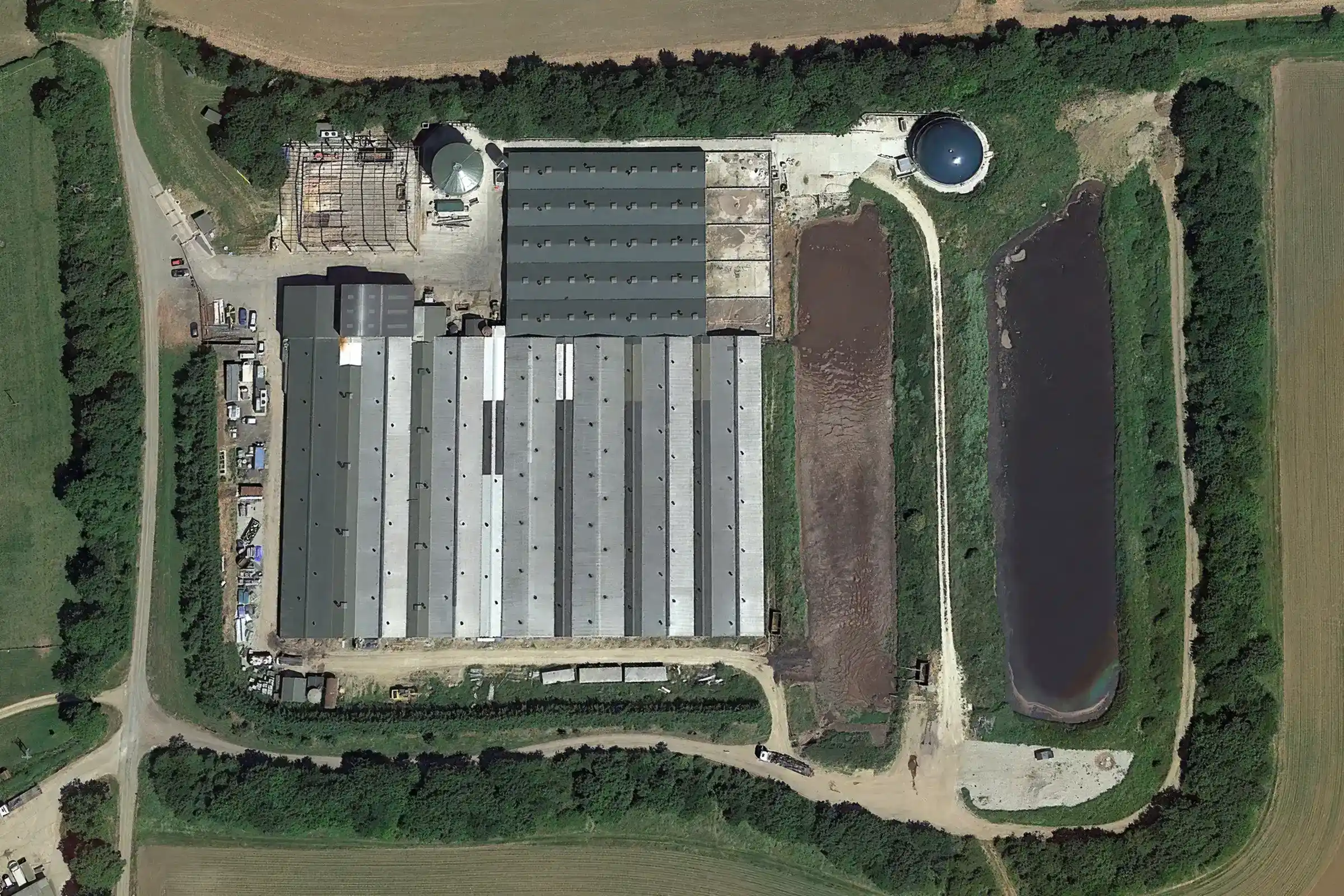
Small farms are being squeezed out.
- Fewer local abattoirs: The UK’s small abattoir network has shrunk from over 2,500 businesses in the 1970s to just over 200 today. English cattle and sheep abattoirs fell a further 16% and 15% respectively between 2019 and 2024.6
- With fewer local places to sell, farmers are pushed towards a few big processors that want large steady volumes, and for many that means bigger, more intensive farms designed to produce as much meat as quickly and consistently as possible.
- More factory farms: The number of UK factory farms increased by 12% between 2016 and 2023.7
- More megafarms: More than 1,200 megafarms now operate in the UK, up 21% since 2017. A megafarm confines at least 125,000 broiler chickens, 82,000 egg-laying birds, 2,500 pigs, 700 dairy cows, or 1,000 beef cattle.
The processing stage matters for animal welfare too. In the UK, 95% of broiler chickens are raised in intensive indoor units. Fast-growing breeds make up more than 80% of the chicken on our shelves. Bred to grow so fast to produce as much meat in the shortest time, these ‘frankenchickens’ suffer. Their unnatural growth rates mean they suffer serious skeletal, heart and mobility problems.8
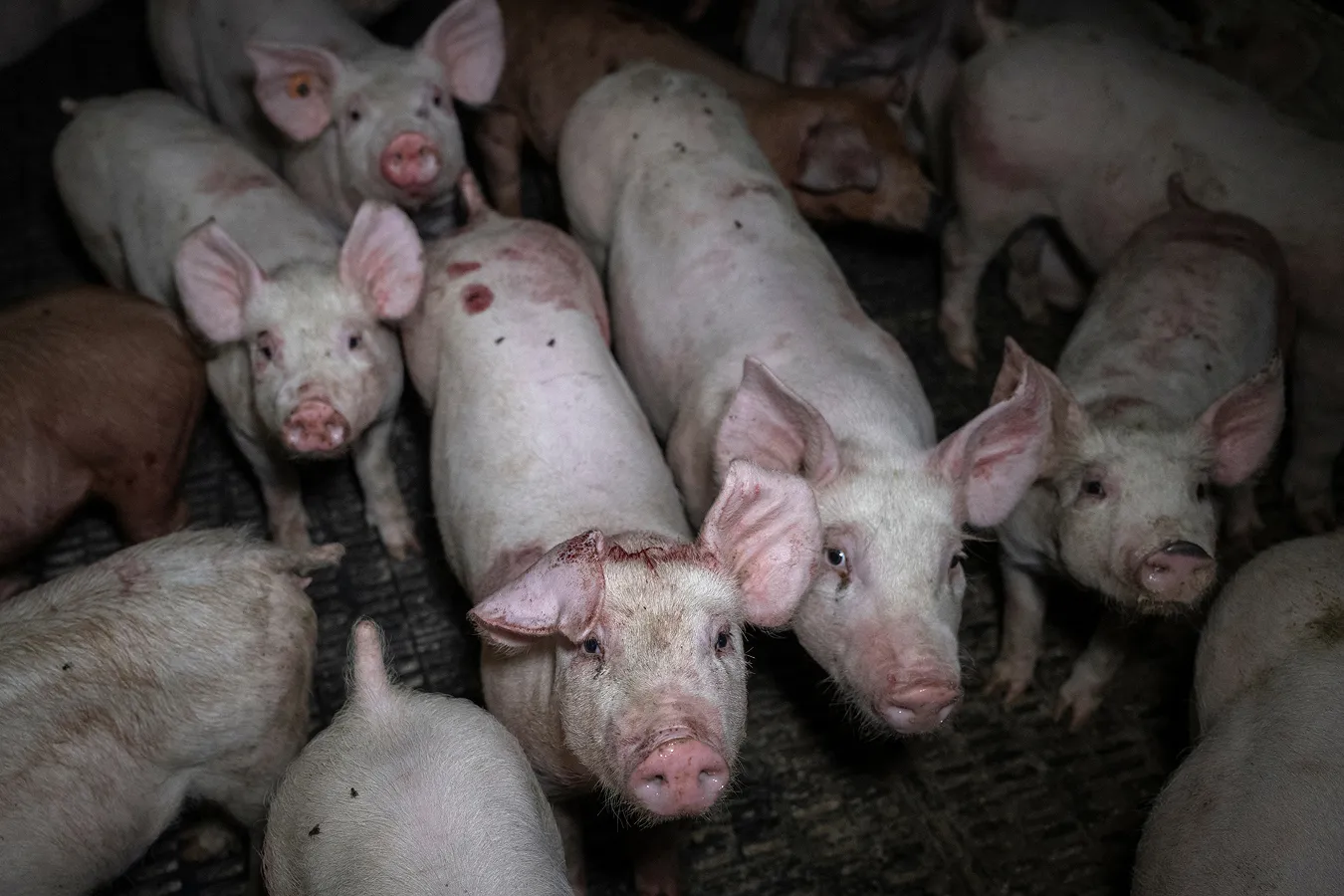
Cranswick, one of Britain’s largest pork processors, uses Carbon dioxide (CO2) gas chambers to kill pigs, the method used for 90% of pigs slaughtered in England and Wales. For decades, the government’s own Animal Welfare Committee has warned that these gas chambers cause pigs extreme distress and suffering. The method used to slaughter millions of pigs is part of the processing stage that is largely invisible to shoppers.
The issue isn’t just what’s on the shelf. It’s the farming system needed to keep that shelf full.
What the label does and doesn’t tell you
The front of the pack tells you which supermarket sold the meat. The oval on the back tells you which plant last handled it, but only if you know how to read it. And no label tells you how the animal was slaughtered.
Shoppers comparing a premium range with a value pack may assume the price gap reflects a difference in the meat, the farm or the standards. But different products often trace back to the same processor. And fresh “British reared” chicken sits alongside chicken processed as far away as Europe or Asia.
The processor’s name doesn’t appear on the front of the pack. It doesn’t need to. The retailer’s brand tells the story the retailer wants you to hear. Different packaging, sometimes different prices, and more often than not the same handful of companies behind them.
“Morrisons told us that unlike other UK supermarket groups, they have for many years “operated a vertically integrated model, processing and manufacturing much of the fresh food sold in its supermarkets in its own facilities.” They pointed out that Farmers Boy is not a third-party processor, but is directly owned by Morrisons.
The retailer added: “Rather than creating vulnerability, this model – where we buy livestock from British farmers and process it in our own facilities – strengthens supply-chain resilience and ensures rigorous oversight across quality, traceability and animal welfare.”
Jim Bligh, Director of Food Policy at the British Retailers Consortium (BRC), told us: “Retailers work closely with farmers, processors and suppliers to maintain resilient supply chains and ensure customers have access to high-quality, affordable food. These strong, long-term relationships make it easier for retailers to maintain and monitor high standards throughout the supply chain.” Speaking on behalf of Co-op and other BRC members which includes Sainsburys, he added “Animal welfare is a priority for retailers, and they expect consistently high standards from every supplier they work with.”
ABP Food Group and 2 Sisters Food Group declined to comment.
How to check who made your meat
- Turn the pack over and find the small oval mark.
- Note the country code and the number.
- Search the number on the Food Standards Agency’s list of approved meat establishments.
- You’ll see the company and the plant’s location.
*Figures are shares of meat products recorded on shelves in a sample of supermarket stores in London and Brighton in 2026, not shares of sales volume. 913 products, nine supermarkets.