Impacts on Society of Slaughterhouses
Domestic violence, criminality, and rape increase.
the upper estimate of rates of depression among slaughterhouse workers.1
increase in arrests for rape in areas where slaughterhouses are present.2
increase in offences against the family in areas where slaughterhouses are present.3
What It Is
When we ask people to do jobs that are so disturbing that we would never contemplate doing them ourselves, we create devastating and wide-ranging social impacts.
Research on the psychological impacts of slaughtering animals has shown increases in mental health issues, including depression, anxiety, and PTSD. Research also found that people who work in slaughterhouses are more likely to demonstrate “violence-supportive” attitudes.
To cope with the psychologically difficult task of subduing and cutting the throats of animals day after day, slaughterhouse workers often need to find coping strategies. These include numbing their thoughts through alcohol and drug use, and finding violent outlets.4 Unsurprisingly, the impacts spill out of the slaughterhouse and into the rest of society, with increases in domestic violence, child abuse, sexual assault, and rape among slaughter workers.5
What They Do
Sensitive Content
This video contains content that some people may find upsetting
Impact
Mental health.
Slaughterhouse workers are more likely to suffer poor mental health.
Coping strategies
They are likely to resort to unhelpful coping strategies such as a reliance on alcohol or drugs.
Social impacts
All of society suffers when we ask people to slaughter animals on our behalf.
Hall of Shame

Investigation and Reports
The psychological impact of slaughterhouse employment: A systematic literature review
Was Jack the Ripper a slaughterman? Human-animal violence and the world’s most infamous serial killer
Confessions of a slaughterhouse worker
References
- 1. https://journals.sagepub.com/doi/10.1177/15248380211030243
- 2. https://journals.sagepub.com/doi/10.1177/15248380211030243
- 3. https://journals.sagepub.com/doi/10.1177/15248380211030243
- 4. https://journals.sagepub.com/doi/10.1177/15248380211030243
- 5. https://journals.sagepub.com/doi/10.1177/15248380211030243
Take Action
-
 Frankenchickens
Ban Frankenchickens in the UK
Tell the Secretary of State at Defra to ban factory-farmed and fast-growing chickens known as Frankenchickens.
-
 Frankenchickens
Ask Your MP to Take Action
Ask why Frankenchickens are legal, when it’s unlawful to farm animals that will suffer because of how they have been bred.
-
 Factory Farming
End Factory Farming by 2040
It's time to bring it all down. Tell the government to block new factory farms and ban factory farming by 2040.
-
 Gas Chambers
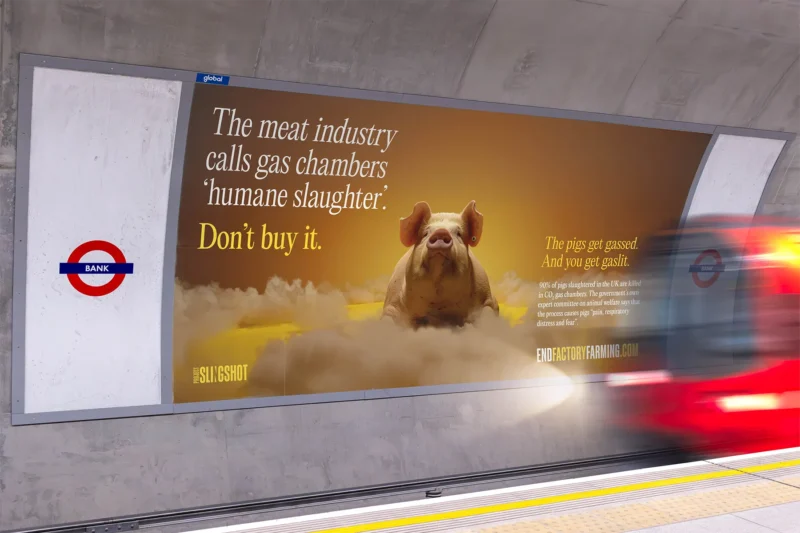
Ban CO2 Gas Chambers for Pigs
Tell the Secretary of State at Defra to ban the use of CO2 gas chambers for pigs.
-
 Gas Chambers
Ask Your MP to Take Action
Ask why CO2 gas chambers are legal when the government’s Animal Welfare Committee recommends phasing them out?
-
 Gas Chambers
Tell Tesco to Drop CO2 Gas Chambers
Tell Tesco to stop selling meat from pigs killed in CO2 gas chambers, and commit to honest, transparent labelling.
-
 Gas Chambers
Tell McDonald’s to Drop Gas Chambers
Tell McDonalds to stop sourcing pork from pigs killed in CO2 gas chambers, and be transparent about slaughter methods.
-
 Donate
Power the Slingshot
Your monthly gift funds high-impact billboards, PR stunts, and campaigns that expose Big Ag and help us to bring down factory farming.