5 ways Big Ag is profiting from family farms
A former farmed animal veterinarian speaks out about how Big Ag profits at the expense of family-run farms.
Farming used to be part of everyone’s lives. People knew where their food came from, who made it, and how. More recently, farming has become a profitable investment for companies with little to no understanding of the day-to-day struggles of agriculture. The image most Brits hold of a friendly family farm is being used to the advantage of big business, and to the disadvantage of farmers, animals, and consumers. I am a former farmed animal veterinary surgeon who still works closely with the industry, so I have seen it first-hand. This is how they do it.
Fake farm branding
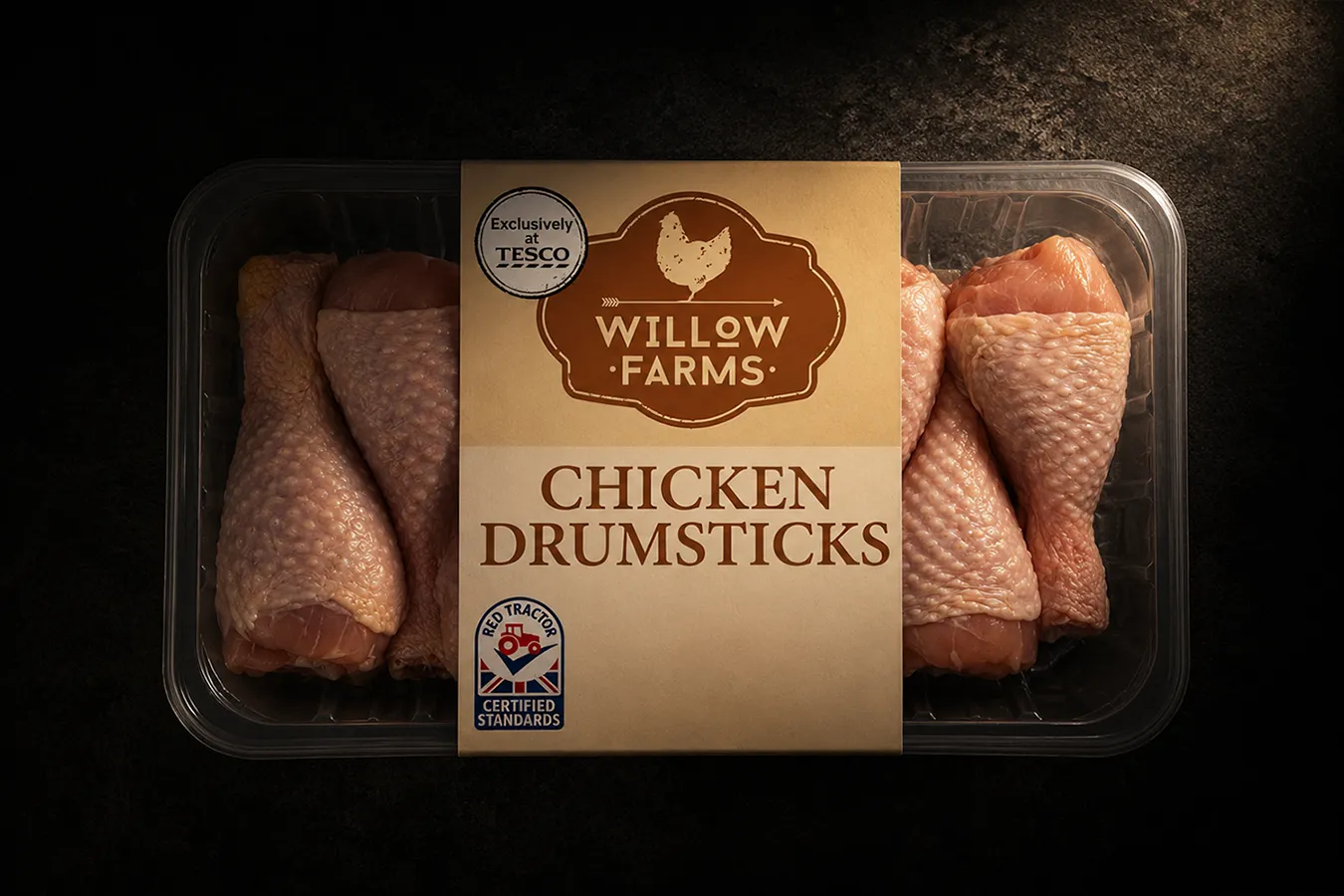
Consumers want to support British farms, and they value environmental and animal welfare standards. This has been shown in a multitude of studies, and yet consumers consistently purchase imported and industrially produced meat. So why the inconsistency? Consumer data has been used by corporations to manufacture fake farm branding and packaging. These labels, bearing friendly local farm names such as “Woodside Farms”, “Boswell Farm”, and “Willow Farms” mislead consumers into believing they are buying a British, family-farmed product. In 2017, the NFU and some individual farms and law firms pursued legal action over the use of large supermarkets using fictional farm names. One small farm, which reared pigs to standards above the industry norm, noted that their name was (and is still) being used on a range of pork products in Tesco, whose standards were arguably lower in terms of environmental stewardship and animal welfare. So far, they have been unsuccessful in taking on the corporate giant, and reclaiming their brand.
Environmental corner cutting
Big business prioritises efficiency, which in the farming world often leads to environmental and animal welfare issues. In 2025, Avara Foods, one of the largest global suppliers of poultry, came under fire for the pollution of the river Wye, which was allegedly caused by poor management of the manure from their 24 million chickens. Just the chickens owned by Avara in this one catchment area constitute almost a fifth of all UK chickens. Similarly, a unit of 22,000 pigs owned by a company that generates a £13 million annual profit and £146 million annual turnover, were recently fined for not acquiring adequate permissions for slurry management. When environmental issues occur, the media backlash can result in consumers losing trust in farming as a whole, and damage the reputation of farmers who are having little relative impact, or who are actively trying to reduce environmental harm with their practices.
Run by banks for shareholders
When large corporations own the meat supply, the profit generated by the farmers’ work is not reinvested into the farm or business as it would be in a small-scale family-owned farm. Cranswick PLC is the UK’s largest pork supplier, founded by farmers in the 70’s, and supplies all major retailers. Despite their farming origins, the company is now owned by Blackrock, The Vanguard Group, JP Morgan, among other shadow banks and investment companies. This means their bottom line isn’t always directed into improving welfare, better feed, or new innovations on farms. Instead, that profit falls into shareholders pockets, or is re-invested into totally different industries, ranging from weapons manufacture to AI infrastructure.
Tax breaks
Tax breaks for farmers are a lifeline for some small farms, allowing families to continue the work of generations of farmers, and to stay in their own homes rather than be forced to sell. For big companies however, they’re a legal loophole ready to exploit. Business Asset Rollover Relief allows companies to avoid capital gains tax when selling and “reinvesting” business assets. When farmers do this, it’s a way of selling one asset (e.g. an unused farm building) to re-invest in the farm by buying more land. With big business however, companies can sell large land assets and “re-invest” in different areas of their company, essentially sucking the profit out of working farmers, and pouring it into different active industries. They can do this because the workers on their “farms” are now employees, and are no longer independent farms run in a traditional setup.
Farmers are disempowered
Around 10 large retailers control the entire meat market in the UK. This gives individual farmers little to no negotiating power, and leaves them vulnerable to exploitation by corporations. Ultimately, big business will always prioritise shareholder value, and while this can sometimes lead to innovation, it has created an environment where active farmers who aim to invest, innovate, and improve their business, are unable to keep up. For example, the average milk farm-gate price in 2026 is around 35p per litre, with an average production cost of 50p per litre. This puts farmers in a vulnerable position, often needing to take contracts from retailers to shield them from market volatility, and losing negotiating power in the process.
Farmers face challenges every day, ranging from keeping their animals and crops alive in unpredictable climates or disease outbreaks, to trying to manage a business alongside working hours that most wouldn’t consider humanly possible. Large corporations buying up what little independent business we have left poses a real threat, not only for animal welfare and the environment, but also farmers’ autonomy.