Are chickens genetically engineered?
The industry prefers to call it selective breeding but factory-farmed chickens have really been genetically engineered.
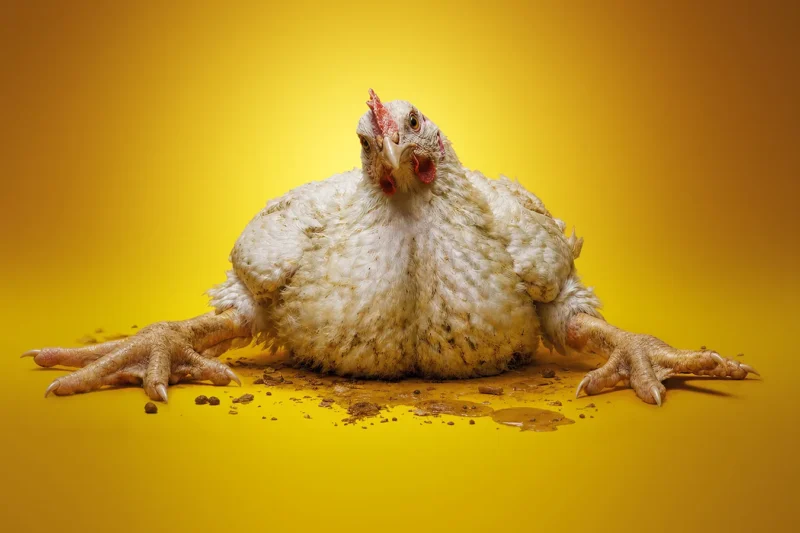
Chickens farmed in the UK today look very different to chickens from 50 years ago. That is because they have been bred to grow so much bigger and so much faster than ever before, because meat is money and the quicker the birds grow, the happier those Big Ag billionaires get. And so, over many decades, chickens have been systematically genetically engineered to deliver what the industry wants, no matter the cost to the birds themselves.
The oldest form of genome engineering is selective breeding.
The Roslin Institute
Are chickens selectively bred or genetically engineered?
Both. Selective breeding is considered the oldest form of genetic engineering, according to The Roslin Institute1 because it deliberately alters an animal’s traits and the genetic makeup of a population over generations.
The industry, however, prefers to use the term “selective breeding” because it sounds less revolting and more natural than “genetic engineering”, which is a boon if you are trying to market a product as not revolting (which it is) and very natural (which it is not). Big Ag knows very well that language matters. In 2025, the Scottish salmon industry (which is not even Scottish-owned but we’ll get into that another time) succeeded in lobbying to end the requirement that they label their salmon as farmed,2 even though it is. That same year, European MEPs voted to stop plant-based food manufacturers from using the words “burger” and “sausage” to describe their products, after concerted lobbying efforts by animal farming unions.3
Are chickens genetically modified?
Yes and no. In everyday parlance, their genetics have been altered (or modified) over many years through selective breeding, which is widely regarded as an ancient form of genetic engineering. And since the terms “genetic engineering” and “genetic modification” tend to be used interchangeably, it could certainly be said that chickens are genetically modified.
However, “genetic modification” in the science-literate, modern world more commonly refers to a laboratory-based process where undesirable genes are inactivated within an organism or a gene is taken from one species and implanted into another to introduce a desired characteristic. And while it is likely that this nightmare is happening in some dodgy lab somewhere in the world, laboratory tinkering with genes is not part of chicken production in the UK. Yet.
And here is something that we just learned… while in the field of biotechnology, GMO stands for any genetically modified organism, the food industry has opted to only apply that term to animals who have been purposefully engineered via lab-based procedures, and not those who have been selectively bred.4 Again, the industry knows that words matter and that people feel more reassured by “selectively bred” than “genetically modified”. But that is what they are.
Do chickens suffer because they are genetically engineered?
Not every animal who has been genetically engineered – whether that is through lab-based procedures or selective breeding – suffers as a result of what has been done to them. But chickens do because Big Ag greed merchants have pushed the birds’ biology far too far. Today, chickens endure enormous and inescapable suffering because of their genetics.
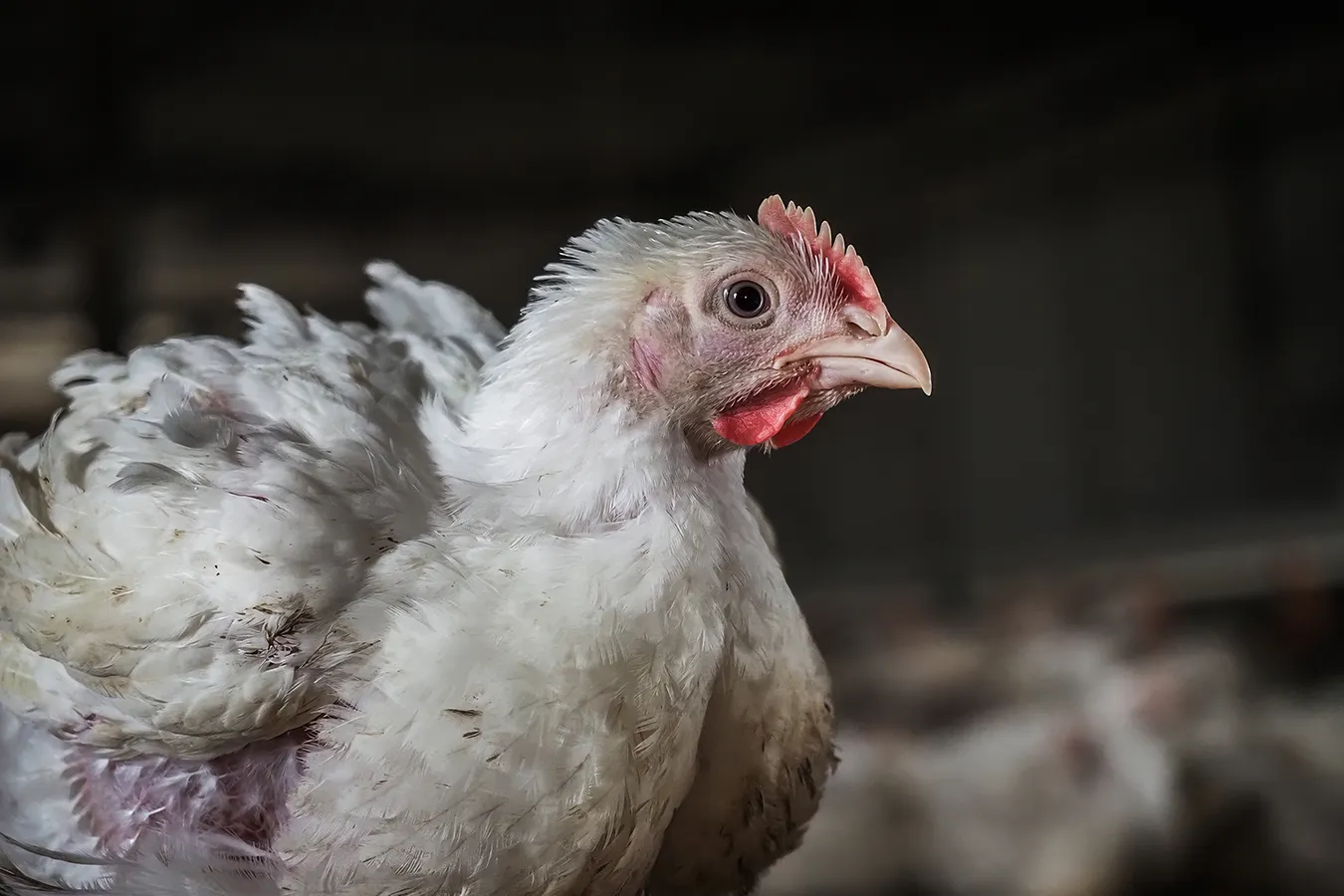
Dubbed “Frankenchickens” because of the unnatural way in which these lives have been created, the birds being farmed today are more prone to heart attacks, lameness, bone deformities and fractures, muscle diseases, burns to their skin from sitting in their own waste, and organ failure.5 The mortality rate for these poor animals is 4-6%, which means around 50 million birds a year cannot even survive their 35 allotted days. It’s a shocking indictment of our greed-trumps-everything food system, and it affects 90% of the birds farmed in the UK.6
How to avoid genetically engineered chicken
All chickens have been genetically engineered to produce more meat than their ancestors, the jungle fowl. Avoiding chicken is the only way to avoid this, but there is a spectrum of harm caused. Unfortunately, almost all of the 1.1 billion chickens reared for meat each year in the UK are right at the very worst end of that spectrum.7 Around 90% are these fast-growing Frankenchickens,8 and they are confined inside intensive factory farm units. 9
Supplied by Big Ag corporations like Avara Foods, Moy Park, and 2 Sisters, this is the chicken meat that is inside every service station sandwich and served at every fried chicken outlet. It is the chicken stocked on almost every supermarket shelf and in almost every restaurant. If it doesn’t say it isn’t factory-farmed, then it is almost certainly a factory-farmed, genetically engineered Frankenchicken. It is very hard to avoid.
Find out what the “higher welfare” claims really mean.