Label
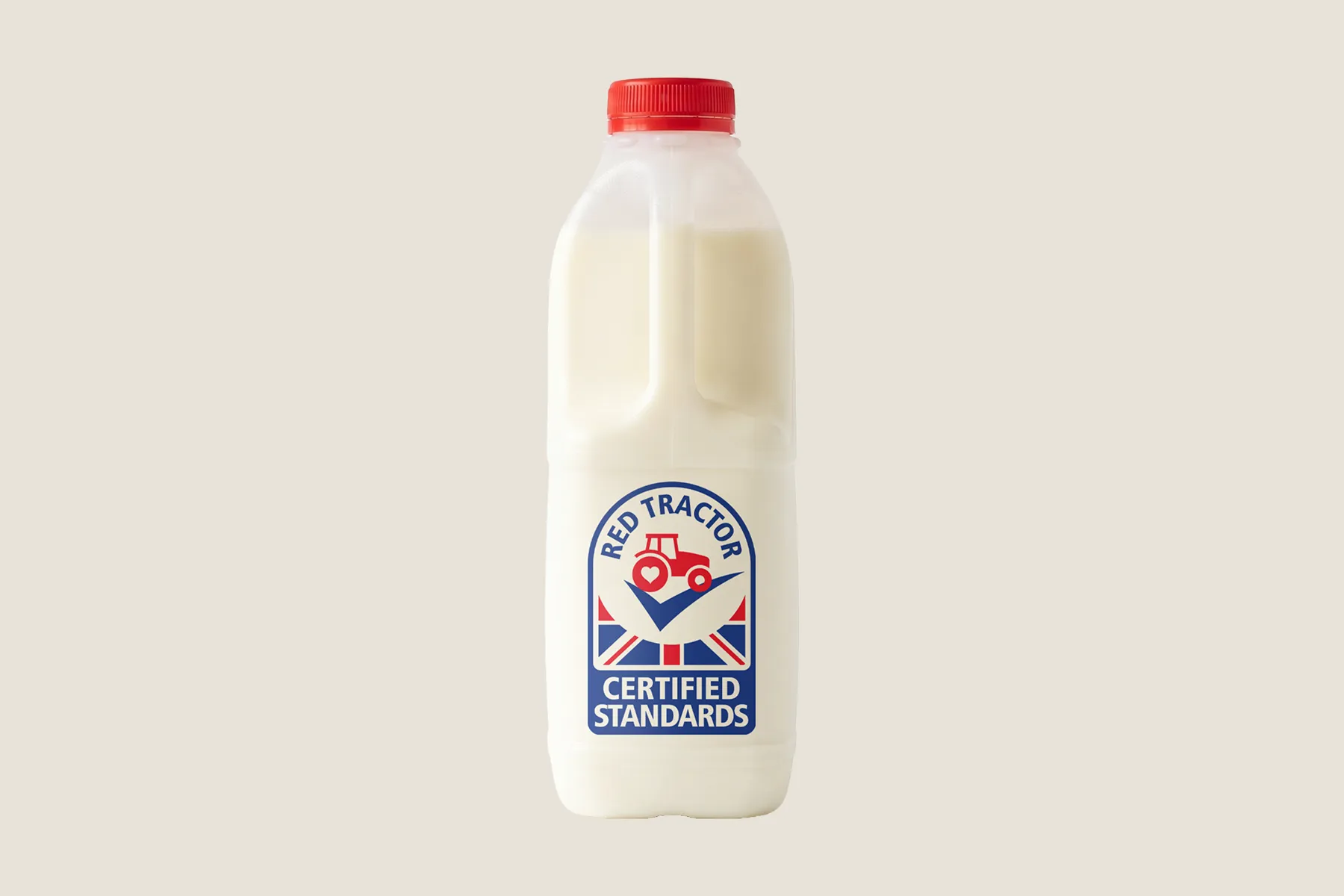
Supermarket’s Own Label / Red Tractor
Our verdict
Despicable factory farming. Don't buy it.
Pros
- No electric goads should be used. Otherwise, basically just the bare legal minimum.
Cons
- 95% of UK milk is Red Tractor approved, and it is impossible to know whether the cows were ever on pasture or spent their whole lives inside a stinking factory farm.
- Calves are taken from their mothers. They may be kept isolated in hutches (although they should be able to see and touch their neighbours) and reared for the veal trade.
- If male and not profitable, calves may be killed at birth.
- Dairy cows can be transported to slaughter when they are heavily pregnant — at up to eight months into their nine-month pregnancy.
- Journey times of more than 8 hours are permitted.
- Mutilations are permitted.
- Significant environmental impacts in terms of pollution, land use, and climate. Lower environmental compliance on Red Tractor dairy farms than on non-Red Tractor farms.
- Workers have been filmed punching, beating, and kicking animals at two separate Red Tractor dairy farms.