What are Frankenchickens?
The extreme forced growth of factory-farmed chickens causes severe suffering but makes billionaires very wealthy.
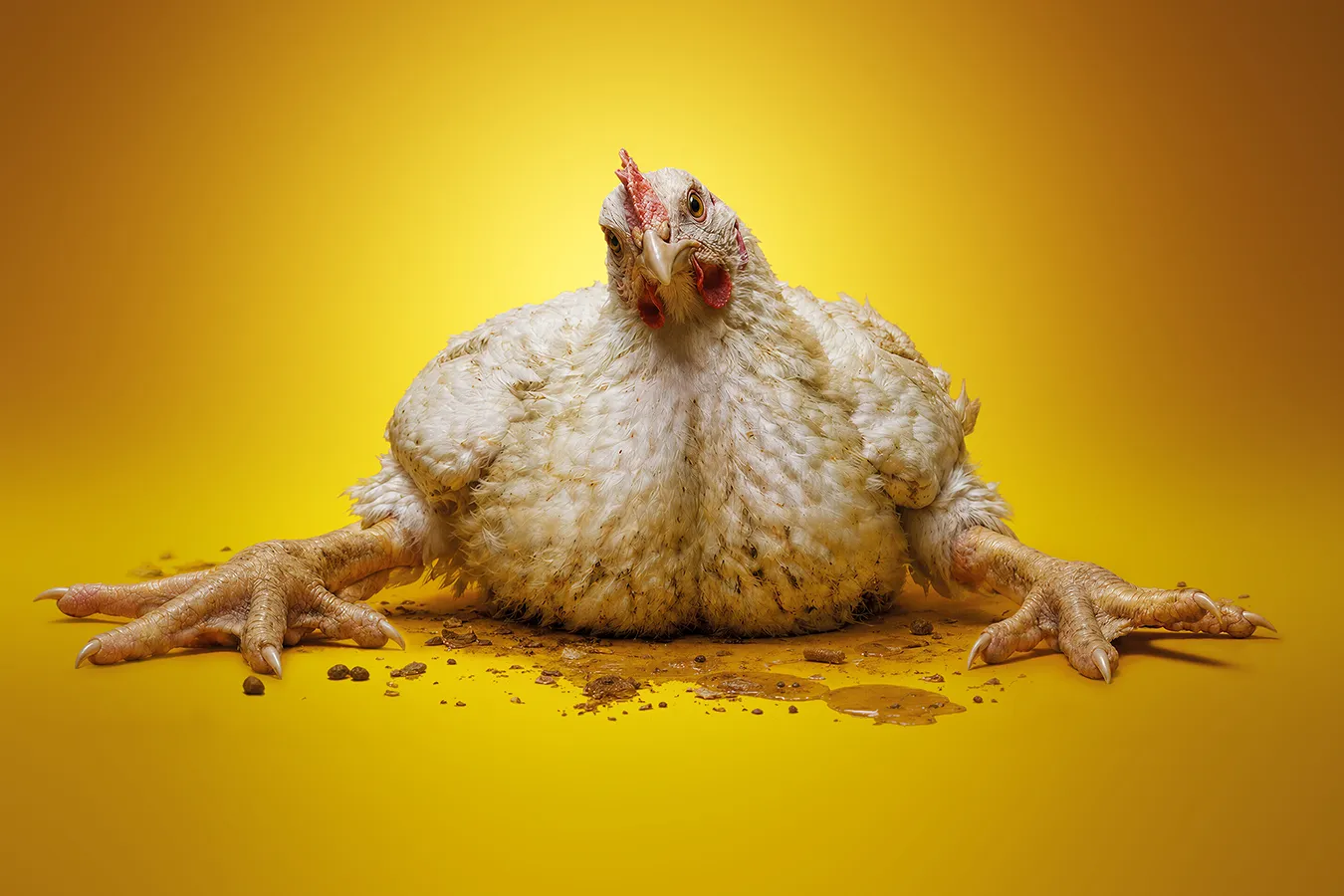
Big Ag loves big money and the best way to get it is to make animals grow as big as possible as fast as possible. If that sounds like some kind of dystopian nightmare, welcome to the wonderful world of chicken farming.
The term “Frankenchicken” is used to describe the breeds of birds that have been overbred to grow unnaturally fast. Today, 90 per cent of chickens farmed in the UK reach slaughter weight in just 34 to 36 days, which means growth rates have increased by over 400% since the 1950s.1 If humans grew at a similar rate, a 6.6 lb newborn baby would weigh the same as a fully grown tiger by the time they were two months old.2 And if that isn’t the plot of a 1960s B movie, we’d be very surprised.
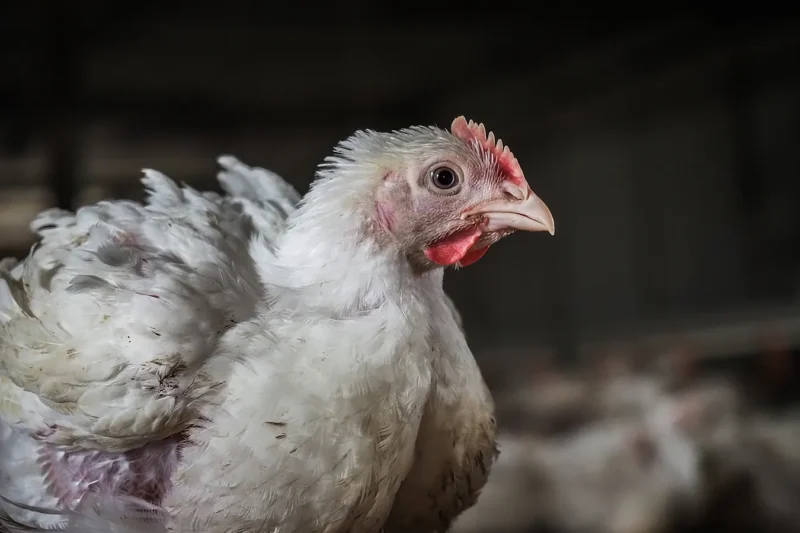
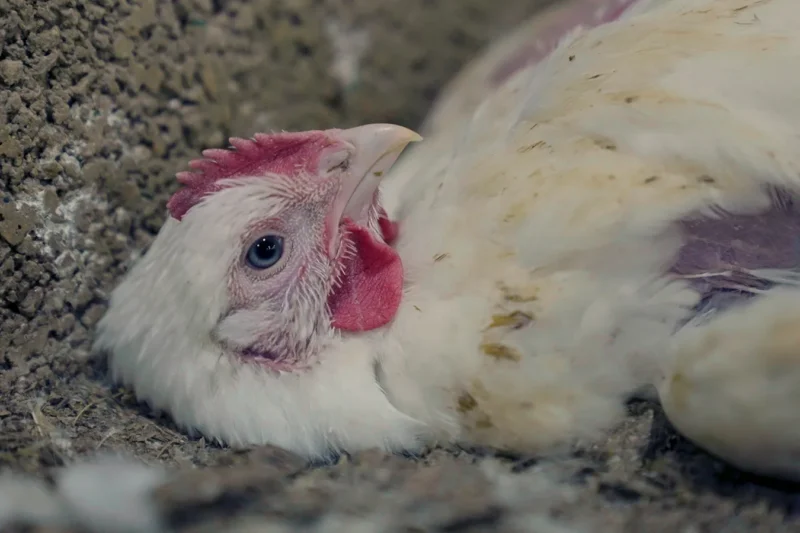
But this is a real-life, modern-day horror story because if you really look at the birds trapped inside their swollen bodies, you can see that they are still chicks. They have a chick’s blue eyes and they still tweet like baby birds.
Suffering is bred into them
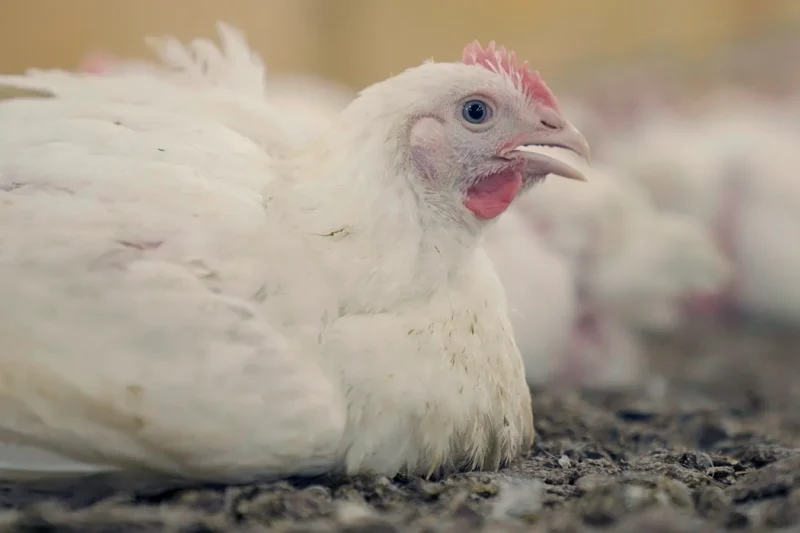
You cannot force extreme growth onto a baby animal of any species without there being very real health problems and Big Ag knows this. In the case of chickens, the growth puts enormous pressure on their musculoskeletal systems and organs, which struggle to keep up with the growth of their bodies. This means bone deformities and broken bones, lameness, heart attacks, ulcerating skin burns, and organ failure are all more common.3 Plus, because the birds are more likely to get sick and die,4 the factory farming industry uses a lot more antibiotics just to try and keep them alive for those 35 days.5
Even so, the attrition rate is enormous. In 2022, 80 million birds succumbed.6 That is seven percent of all factory-farmed chickens who were unable to survive what Big Ag has done to them.
The signs are in the meat
You know how Jesus’s face often turns up on toast or in coffee foam? Well, there are signs to look out for with chicken too.
The birds’ extreme growth rate is a cause of “white striping” – something you can see very easily in the meat in shops and restaurants. This is a common muscle disease in which the fibres of the muscle atrophy and die and are replaced by scar tissue and fat deposits.7 That’s what people eat.
And if that wasn’t grim enough, keep a look out for what the industry charmingly calls “hock burns” but which are, in fact, “pee burns”. As their bodies balloon and they become less able to stand, the birds spend large amounts of time slumped on the urine-soaked floor. But urine is full of ammonia, and it burns their skin, causing excruciatingly painful burns and ulcers from which there is no escape. Those blackened skin burns can often be seen on raw chicken meat in supermarkets.
Who is responsible for Frankenchickens?
Putting animals through such suffering for profit is straight-up disgusting and in the UK, there are four major companies responsible:
- Avara Foods: supplies McDonald’s, KFC, Nando’s, and supermarkets but is perhaps best known for its association with polluting rivers.
- Moy Park: supplies McDonald’s, KFC, Nando’s, and supermarkets, and is ultimately owned by Worst Company in The World™ JBS.
- 2 Sisters: supplies KFC and all the leading supermarkets, where their chicken is sometimes sold under a fake farm name because it sounds cuter than where it really came from.
- Banham Poultry: supplies Morrisons, Safeway, and Booths and is owned by the same billionaire poultry baron that owns 2 Sisters.

What is the government doing?
In one word: nothing. For a brief moment, there was hope that it would step in, but then came the actual detail of the government’s long-awaited Animal Welfare Strategy and it was another stunning let-down. Despite being billed as “the most ambitious animal welfare strategy in a generation”, the government weakly promised only to “support voluntary efforts to move away from the use of fast-growing meat chicken breeds”. Well, that told them! We are sure those billionaires will voluntarily change their ways any day now.
Does anyone care about Frankenchickens?
In 2025, the UK Court of Appeal ruled that it is unlawful for farmed animals to suffer because of their genes, even though most of them do. It is not a ruling that troubles the industry. They won’t act. And, right now, the government won’t make them.
But we will. And we know you will, too.