How Big Ag whitewashes its reputation on a shoestring budget
Big Ag’s knows how to get positive headlines that drown out the revelations it would rather keep hidden. This is how.
Do you ever wonder how Big Ag gets away with it? The animal suffering, pollution, price fixing, tax avoidance, corruption, hygiene breaches, and number of workers who have been injured (or worse) inside their factories.
By rights, all of this should have sunk the industry and yet on it goes, merrily banking its billions. When the manure hits the fan, the industry quickly hires specialist PR firms who know how to redirect attention and salvage battered reputations. But there is a cheaper way to drown out murky allegations with positive headlines and buff up the public image of your company. And Big Ag is no stranger to it.
Give a little, get a lot
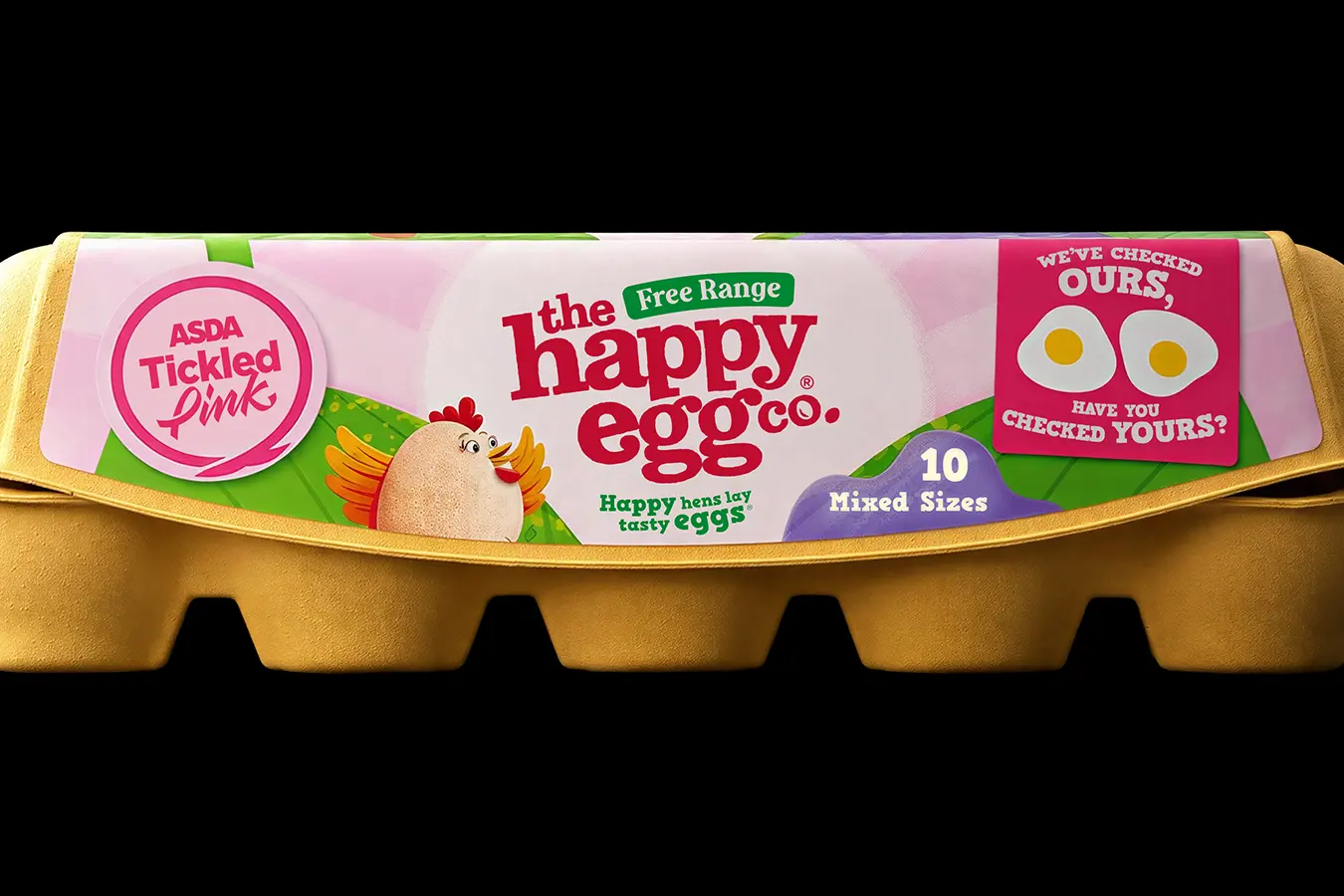
When the Happy Egg Company donated £20,000 to a breast cancer charity and put the charity’s logos onto its egg boxes, you might think that altruism is alive and well. The fact that it bought some positive headlines after a series of shocking exposés is probably neither here nor there.
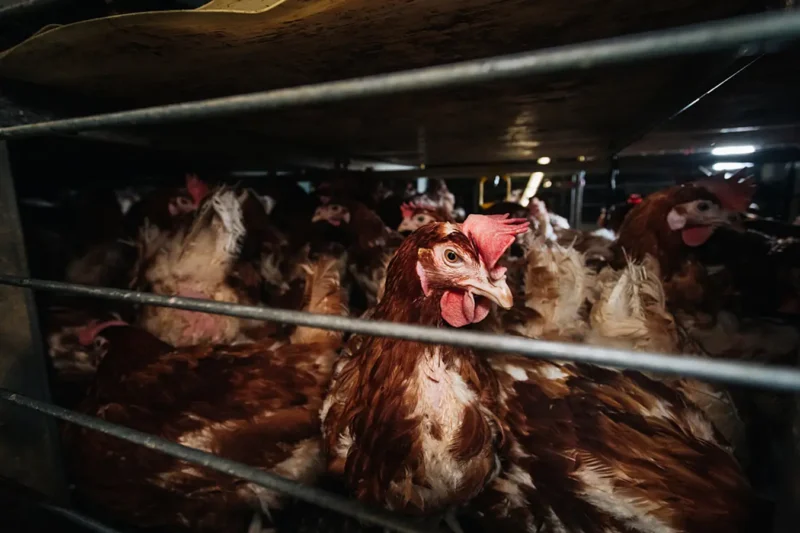
As an example, one recent Happy Eggs investigation that made the national press found:
- Birds with suspected infected prolapsed cloacas and what looked like a broken wing.
- Others had deformed beaks from having been “debeaked”.
- The shed floor was piled high with faeces and dead hens were left to decompose on the metal slatted tiers.
- The “well deserved enrichment” the company boasts about was nothing more than a plastic water bottle and a watering can.
- Outside, were muddy, barren fields with barely any hens wanting to use them.
Ouch. With that in mind, £20,000 isn’t a huge price to pay to push some positive stories to the top of the internet search. And not only did the donation buy the company some positive press, it allowed them to once again to pretend its hens are on a luxury spa break. “We spend every day looking after the welfare of our girls,” they chirped, “so the campaign message ‘We’ve checked ours, have you checked yours?’ felt like a natural way to encourage people to think about their own health too.”
Colour us cynical, but did it though?
Give even less, get a lot
St Helen’s Farm is no stranger to controversy. Despite the photo ops in green fields, this is a dairy company that keeps all the goats inside factory farm sheds. And it’s not as if the poor creatures are left alone even then. A 2020 investigation found workers punching, kicking, and throttling goats, twisting their tails, hitting them with a pole and leaving them lame. But all of this can be airbrushed away with a simple change in packaging and in a genius move, St Helen’s encouraged other people to donate to the worthy cause they selected. If they do, the goat botherers will match the donations… up to a maximum of £10,000 and throw in another £10k on top. It’s a pretty small price to pay from their £15 million revenue and still cheaper than hiring a reputation management consultancy. And it worked. They got some cosy media exposure where they could show what all round great guys they are.
Get others to give, get a lot
Pilgrim’s Europe, a leading factory farmer of pigs with an annual revenue of £4.2 billion, has launched a Legacy Fund to support charities and community organisations local to their meat processing plants. The groups can apply for grants of up to £5,000. Except, a local newspaper revealed that the funds did not come from the company coffers; instead, it was Pilgrim’s workers who volunteered their time to raise the money. You have to admire evil genius when you see it. And all that from-the-goodness-of-their-heart community support no doubt helps whitewash a company more commonly known in the headlines for:
- Pigs being hammered to death, piglets having their tails cut off and teeth pulled out without anaesthetic, and mother pigs suffering from torn vulvas and severe prolapses.
- Pigs gasping for breath as they were slaughtered in a CO2 gas chamber at a Pilgrim’s slaughterhouse near Manchester. A vet who reviewed the footage called it “an unacceptable way to treat any animal”.
- Pilgrim’s reduction of its UK tax liability by shuffling cash through an off-shore holding company – a manoeuvre described as “aggressive tax avoidance”.
- Pilgrim’s reluctance to disclose what it does with the manure of the 750,000 UK pigs it processes, which amounts to 4,413 tonnes of shit every single day. This is a serious matter because animal farms are responsible for more river pollution in the UK than the water companies.
Santa is branded by Big Ag
Last Christmas, Cooke Aquaculture – one of the leading salmon factory farmers in Scotland – sent “more than 140 toys, games and books” to a Shetland hospital for those young people who had to stay in hospital over the festive period. These no-strings-attached gifts were packaged in Cooke-branded tote bags and the company no doubt enjoyed that warm fuzzy feeling of seeing a hospitalised child posing with the branded bag of goodies for the local newspaper. It certainly brought them a much more positive headline than Cooke is used to. Here is a small selection of the usual fare to whet your appetite:
- Mass deaths: nine million fish killed by diseases at Scottish salmon farms
- Cooke loses nearly 60,000 fish in two mortality events at Newfoundland farm sites
- Seafood company under investigation after allegations of animal abuse
- Fish farms: £10m handouts, £900m profits and 300,000 tonnes of pollution
- Formaldehyde used 200 times by fish farm industry
Free swimming lessons, bring your own hazmat suit
Cooke is not the only salmon factory farmer to be throwing its loose change at community projects; Bakkafrost stepped in to help pay for a bus to take primary school children to their swimming lessons. Given Bakkafrost’s use of toxic chemicals in the waters around where these children live, we can only hope they are also providing them with hazmat suits and private medical care, too. Still, it must be nice for them to be seen to be the good guys for a change. Normally, the press tends to focus on:
- Bakkafrost being one of three firms that lobbied the Scottish government to oppose a new safety limit on emamectin, the toxic, wildlife-harming chemical it uses to kill lice.
- Animals having their gills cut while fully conscious at a Bakkafrost farm, with some left to asphyxiate on the floor, while others were clubbed to death.
- Farm conditions being so bad that 2.25 million fish died at their Scottish sites in 2023, which somehow is still an improvement on the 3.5 million fish who could not survive in their farms in 2022.
- The infestations of flesh-eating lice and the fish who had been left to starve to death in a sea cage that Bakkafrost had claimed was empty.
- Of the 19 fish farms identified by the Scottish authorities as posing the biggest risk to endangered wild salmon due to the spread of lice, six belonged to Bakkafrost.
- Bakkafrost Scotland hiring lawyers to try and stop an investigator from documenting the suffering and environmental impacts the company causes. Apart from all of the above and much more, we wonder what they have to hide.
Have a lifeboat named after you
Bernard Matthews, the man, was clearly a long-standing supporter of Caistor Life Boat Station and in recognition of that, his name was given to one of their boats. But he also gave his name to one of the most loathed factory-farming corporations in the UK.
Today, Bernard Matthews, the company, is owned by Ranjit Singh Boparan, who also owns the leading chicken farming corporations 2 Sisters and Banham Poultry. After decades of appalling press – including animal abuse, bird flu outbreaks, falsifying hygiene data, and workers getting dragged into machines – Bernard Matthews forked out £3 million to an agency to help restore its reputation. That was £3 million they may as well have set fire to given what came next: Ranjit Singh Boparan handed the running of the company to his son, Antonio Singh Boparan, the man who had already been jailed for dangerous driving that left a toddler brain damaged after overtaking at 72 miles an hour in a 30 mile per hour zone. And then jailed again for violent disorder that led to one of the victims being blinded. Unsurprisingly, Antonio didn’t last a year in the role, largely because he went to jail for a third time when the toddler he had harmed, by then aged nine, died from the injuries he had inflicted on her.
We imagine that the sweet lifeboat story brings some welcome relief when it comes to internet searches about the company.
Get good media, no charitable donation required
For those less charitably minded, or wanting a different kind of headline, there is always the option to commission a poll that reveals something you can spin positively (some might say, desperately), and then pitch it everywhere as though it is a hot-topic news story.
Our old friends at Bernard Matthews unleashed this gem of a story on food waste. Now, there is no doubt that food waste is a big problem and papers love to write about it. But how on earth does a factory farm and meat processor find a way to wedge itself into that particular story and along the way get itself some positive press?
Well, if you insert a question into the poll about whether children playing with their food is more likely to make them eat it and thereby waste less, a company that makes dinosaur-shaped nuggets can buy themself some lovely headlines all around the country. It matters not a jot that the industrial meat industry wastes enormous amounts of food by feeding it to animals only to get fewer calories and less protein back in return. All is fair in love and marketing.
Big Ag versus the free press
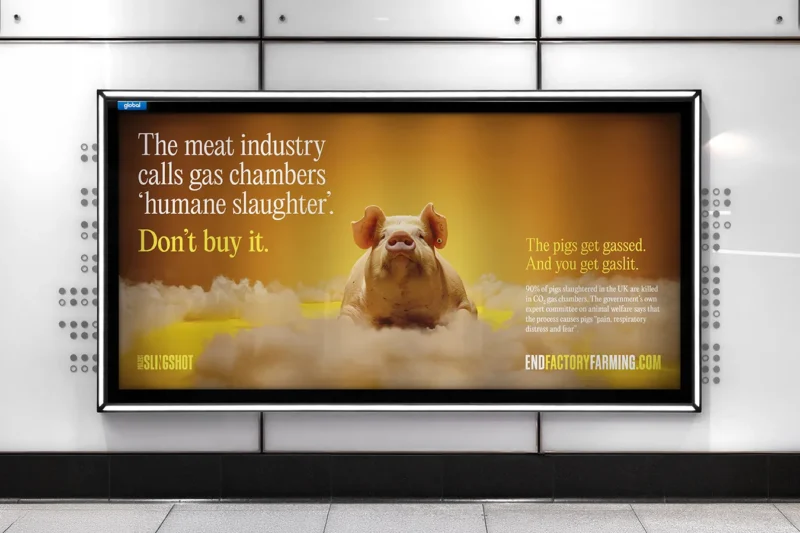
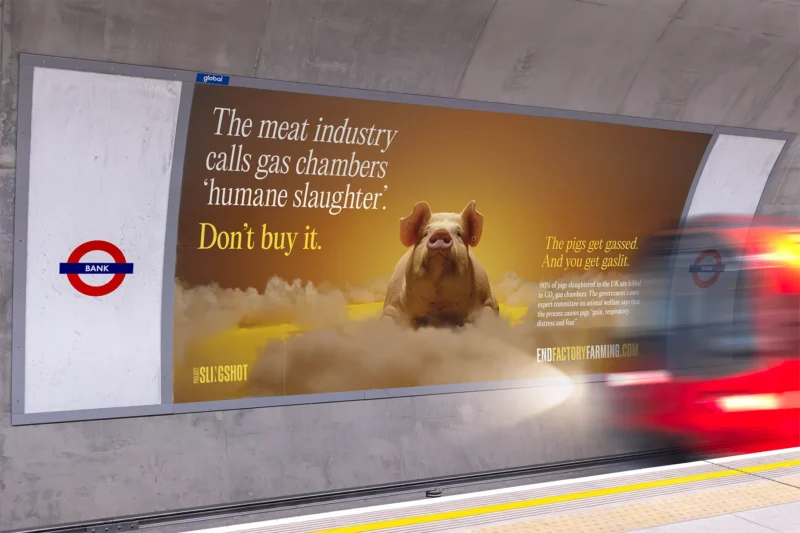
The free press can prove very trying for Big Ag as it tends to reveal all the secrets that the industry would really rather you did not know about. Things like gas chambers for pigs and dairy cows being abused. It’s hard to stop all the negative headlines but by adding a few positive ones to even up the balance, profit margins can be protected and the lobbyists get plenty of ammunition to press for light-touch regulation. “See how loved our client is in the community! Just see what a force for good they are!”
It’s eye-rollingly obvious, but still it works. No wonder they are all at it.